

 Eng
Eng  English
 中文简体
中文简体 Français
Content
- 1 Yes, You Can Use Different Wood Floors in One House
- 2 Why Homeowners Choose Different Wood Floors in Each Room
- 3 How to Mix Different Wood Floors Without It Looking Wrong
- 4 Common Wood Floor Combinations That Work Well
- 5 Rooms Where Different Wood Floors Make the Most Sense
- 6 What to Avoid When Mixing Wood Floors
- 7 Does Mixing Wood Floors Affect Home Resale Value?
- 8 Quick Decision Guide: Same or Different Wood Floors?
Yes, You Can Use Different Wood Floors in One House
Using different wood floors in different rooms of your house is not only acceptable — it's a common and intentional design choice in many modern and traditional homes. The key is knowing which combinations work visually and which ones clash. A general rule: vary floors with purpose, not by accident.
Interior designers typically recommend no more than three different flooring types throughout an entire home. Going beyond that tends to fragment the visual flow, making spaces feel disconnected rather than distinct. Within that limit, mixing wood species, plank widths, or stain tones can add character and define zones naturally.
Why Homeowners Choose Different Wood Floors in Each Room
There are several practical and aesthetic reasons to use more than one type of wood flooring across your home:
- Durability needs differ by room. High-traffic areas like kitchens and hallways benefit from harder species like hickory or white oak (Janka hardness: 1820 and 1360 respectively), while bedrooms can use softer, warmer woods like pine.
- Renovations happen in phases. Many homeowners update one room at a time, and exact flooring matches from years ago are often discontinued.
- Design zoning. Different floors help define open-concept spaces — for example, separating a dining area from a living room without a wall.
- Budget flexibility. Using premium hardwood in visible living areas and a more affordable engineered wood in bedrooms can reduce costs significantly.
How to Mix Different Wood Floors Without It Looking Wrong
The most common mistake is choosing floors that are almost the same but not quite — creating a look that appears mismatched rather than intentional. Here's how to avoid that:
Stick to a Consistent Undertone
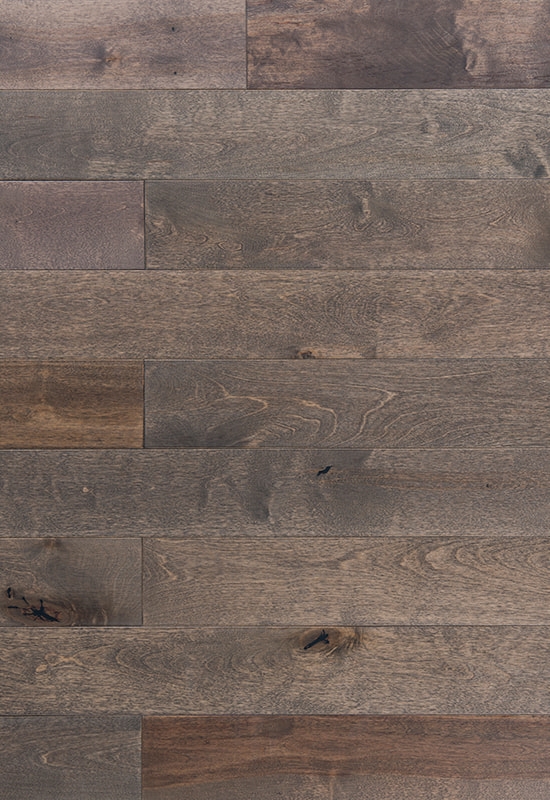
Wood tones carry either warm (red, orange, yellow) or cool (gray, beige, ash) undertones. Mixing warm and cool undertones is the fastest way to create visual conflict. If your living room has warm honey oak, avoid pairing it with a cool gray-toned engineered wood in the adjoining hallway. Instead, choose another warm tone — even if the shade and species differ.
Use Contrast Intentionally
If two floors are going to be different, make them clearly different. A light natural maple next to a rich dark walnut reads as intentional contrast. A medium oak next to a slightly darker medium oak just looks like a mistake. Designers often recommend a difference of at least two to three shades on the wood tone spectrum when mixing floors in visible adjacent areas.
Use Transition Strips Strategically
Transition strips serve as a visual "pause" between different flooring materials. They work best in doorways or at the base of a step. Avoid using transition strips in open-concept spaces where no wall or threshold naturally separates the areas — it draws attention to the change and looks abrupt. In open plans, let one floor run through or use furniture to define the boundary instead.
Match the Plank Direction
Running planks in the same direction — typically parallel to the longest wall or toward the main light source — creates cohesion even when materials differ. Changing plank direction between rooms adds another layer of contrast that, combined with different wood species, can easily become overwhelming.
Common Wood Floor Combinations That Work Well
Below are some tried-and-tested pairings that interior designers frequently use across rooms:
| Room Pairing | Floor Type A | Floor Type B | Why It Works |
|---|---|---|---|
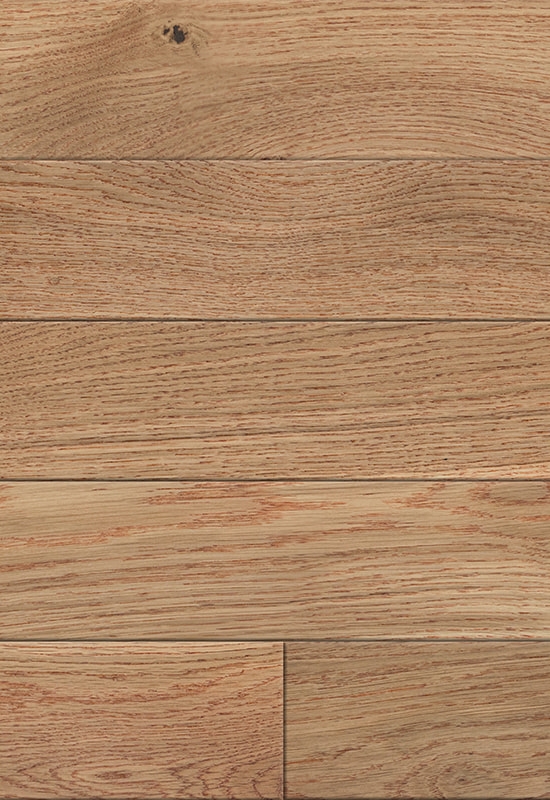
| Living Room / Bedroom | Wide-plank white oak (natural) | Narrow-plank white oak (slightly darker stain) | Same species, same undertone — subtle variation feels intentional |
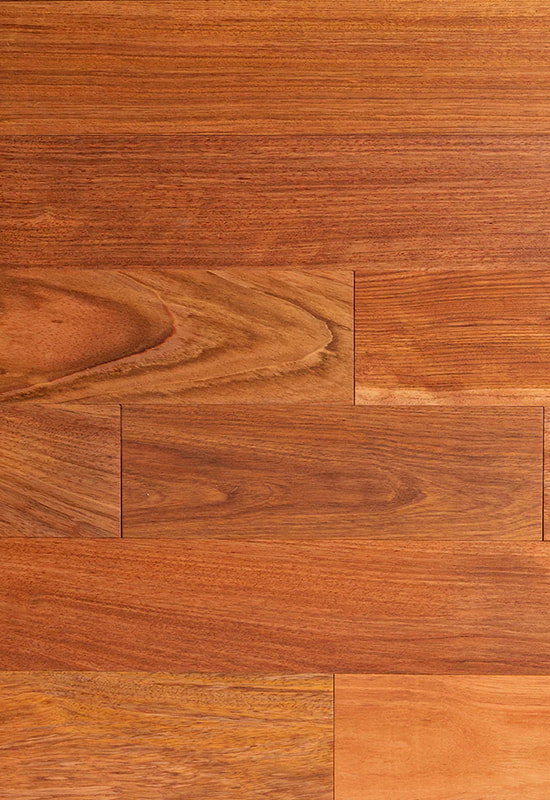
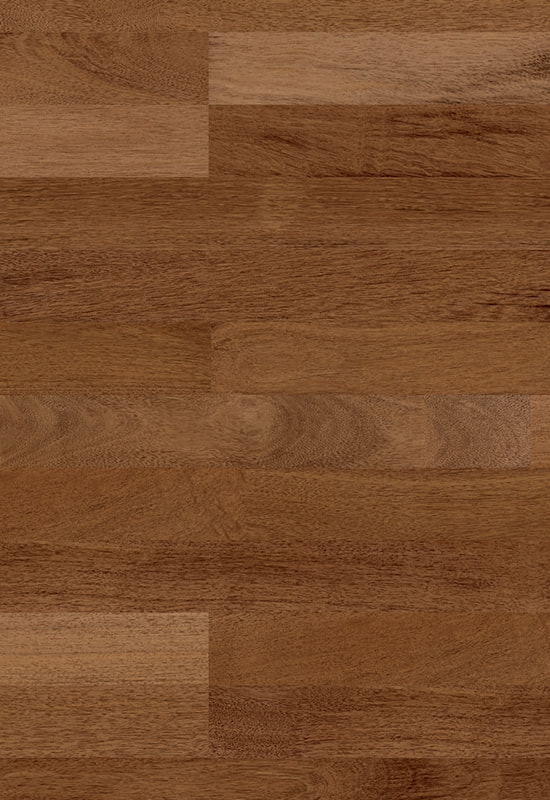
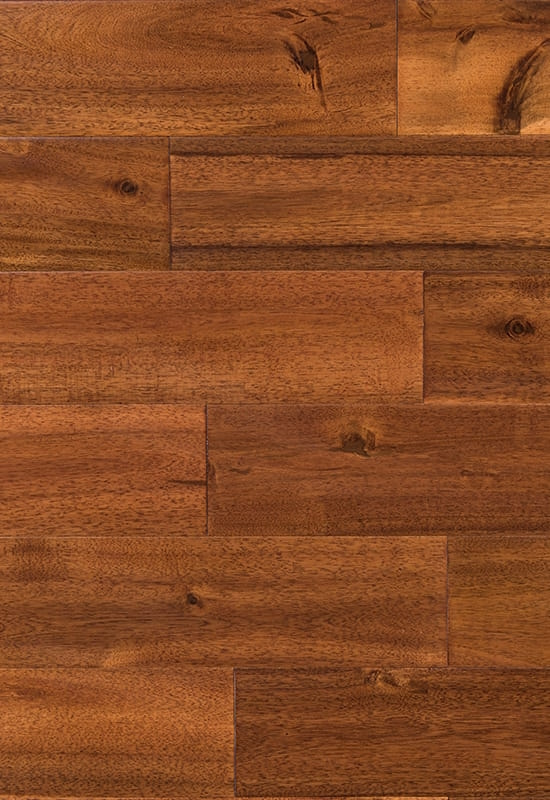
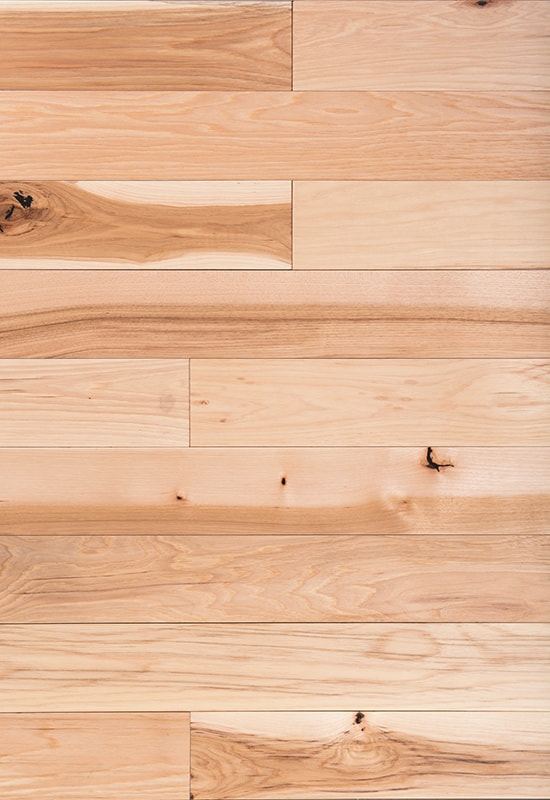
| Kitchen / Dining Room | Hickory (high durability, warm tone) | Walnut (dark, rich, warm) | Bold contrast with matching warm undertones |
| Hallway / Adjacent Rooms | Engineered hardwood (ash, gray-toned) | Solid hardwood (maple, cool beige) | Cool undertones unified; material difference is practical |
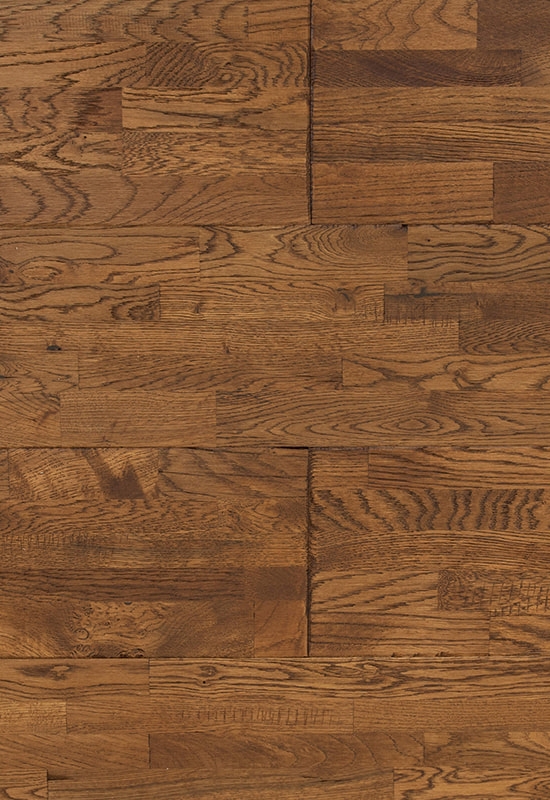
| Staircase / Upper Level | Dark stained oak treads | Light natural oak upstairs | Dramatic transition that signals a new zone |
Rooms Where Different Wood Floors Make the Most Sense
Kitchens and Bathrooms
Solid hardwood is generally not recommended in bathrooms due to moisture — engineered hardwood or luxury vinyl plank (LVP) with a wood-look finish is far more practical. This functional necessity often means kitchens and baths will naturally differ from living areas. Coordinate by matching the finish tone rather than the material.
Bedrooms
Bedrooms see far less foot traffic than common areas, so softer or less durable species are perfectly viable here. Pine, birch, or bamboo can bring warmth and texture to a bedroom without the premium cost of hickory or walnut. This is a smart place to downgrade material grade without sacrificing aesthetics.
Basements
Solid wood flooring should almost never be installed below grade due to moisture and subfloor concerns. Engineered hardwood is the standard choice for basements, and since it's already a different material than the solid upstairs floors, a visual coordination strategy is especially important. Choose an engineered product with the same stain family as the main level floors.
What to Avoid When Mixing Wood Floors
- Avoid near-matches in open sightlines. Two floors that are close but not identical — visible at the same time — always look like an error, not a design decision.
- Don't mix more than three flooring types total. Beyond three, the home loses visual coherence and can feel disjointed.
- Avoid mixing warm and cool undertones. This is the most common mistake and the hardest to fix without replacing a floor.
- Don't ignore the ceiling and wall colors. Wood floors interact with wall tones. A floor that works perfectly in isolation may clash with painted walls in a specific room.
- Avoid mismatched plank widths in adjacent visible spaces. Drastically different plank widths (e.g., 3-inch vs. 7-inch) seen side by side in an open floor plan feel visually chaotic.
Does Mixing Wood Floors Affect Home Resale Value?
This is a practical concern for many homeowners. The short answer: a well-executed mix of wood floors has no negative impact on resale value, and can even enhance it by showing thoughtful design. However, a poorly done mix — floors that clash, too many transitions, or cheap materials in high-visibility areas — can give buyers pause.
According to the National Association of Realtors' 2022 Remodeling Impact Report, hardwood floor refinishing has a 147% cost recovery rate, and new wood flooring installation recoups roughly 118% of its cost at resale. This data reinforces the idea that quality and consistency matter more than uniformity. A cohesive mixed-floor home will fare better than a single-floor home with worn or low-quality material throughout.
Quick Decision Guide: Same or Different Wood Floors?
- Are the two rooms directly visible from each other in an open layout? → Keep floors the same or use a very intentional, high-contrast difference.
- Are the rooms separated by a wall or doorway? → Different floors are perfectly fine with proper transition treatment.
- Is one room a wet area (bathroom, laundry)? → Use a water-resistant alternative; coordinate the tone.
- Is one room a basement? → Engineered hardwood is required; match undertones to main floor.
- Are you replacing a floor that no longer matches? → Go for deliberate contrast rather than a close imitation.

 +86-572-2118015
 No.598. Gaoxin Road, Huanzhu Industrial Zone, Huzhou City, Zhejiang Province, China, 313000