

 Eng
Eng  English
 中文简体
中文简体 Français
Content
- 1 Cleats, Nails, and Staples: Getting the Vocabulary Right
- 2 Why Engineered Planks React Differently to Fasteners
- 3 Cleats vs Nails vs Staples: A Side-by-Side Comparison
- 4 Matching Fastener Length to Plank Thickness
- 5 Site Conditions That Override the Fastener Decision
- 6 When Nails Are the Better Answer
- 7 A Buyer's Checklist Before You Order Fasteners
Two boxes of fasteners can sit on the same plywood subfloor and both be described as "nailing down a floor." One holds 16-gauge barbed cleats; the other holds straight nails. On a solid 3/4-inch strip, the difference is mostly a matter of habit. On a 3/8-inch or 1/2-inch engineered plank, it decides whether the tongue survives the first heating season.
This guide explains what cleats and nails actually do inside an engineered plank, how gauge and length map to plank thickness, and which site conditions push a project away from nail-down altogether. The practical default for most engineered hardwood is a 16-gauge cleat, but thickness, core material, and subfloor type can override it.
Cleats, Nails, and Staples: Getting the Vocabulary Right
Installers, importers, and specification writers often use "nails" as a catch-all term. The fasteners below enter the tongue in similar ways but behave very differently once they are in.
- Cleat. A 16-gauge flooring cleat has an L-shaped head and a barbed, ridged shank. It is driven at roughly 45 degrees through the tongue, so the head seats on the tongue surface while the shank angles down into the subfloor. The barbs resist withdrawal.
- Straight nail. A 16-gauge finish nail, plain or screw shank, enters at a similar angle but has a flat head and no barbed profile. Holding power comes mostly from friction and from the adhesive in a glue-assist assembly.
- Brad. An 18-gauge brad is thin enough for a 3/8-inch engineered plank without splitting the tongue. It positions the board; it does not hold it on its own.
- Staple. A 15.5-gauge staple has a crown roughly 6 mm wide and two legs. It is often called a nail in conversation, but that wide crown is exactly why it behaves differently in engineered flooring.
Pneumatic tools drive all four. Manual nailing still has a place in the first and last rows, where a 16-gauge floor nailer will not fit against a wall or a door casing.
Why Engineered Planks React Differently to Fasteners
Engineered hardwood is typically 3/8 inch (9.5 mm), 1/2 inch (12 mm), 5/8 inch (15 mm), or 3/4 inch (18 mm) thick, built on a plywood or HDF core with a wear layer between roughly 0.6 mm and 6 mm. Fastening happens in the tongue, which on a thin plank may be only 3 mm to 4 mm deep. That is far less material than a staple crown needs to bite.
The geometry explains most field failures. A staple crown cuts across the tongue fibres and, on a 3/8-inch or 1/2-inch plank, can fracture the tongue outright. A cleat of the same length displaces fibres instead of shearing them, and its narrow L-head concentrates pressure over a smaller area, so the tongue is less likely to crush. The barbs then keep each plank tight against its neighbour, which is what prevents visible gapping along a seam.
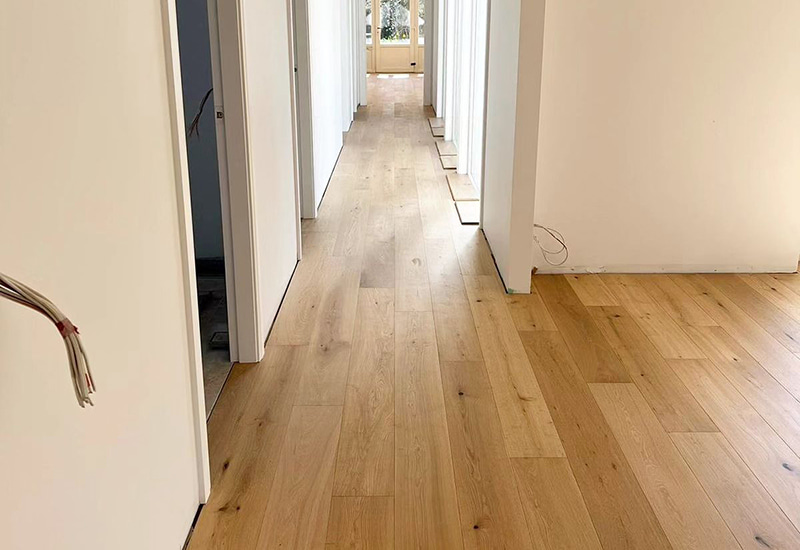
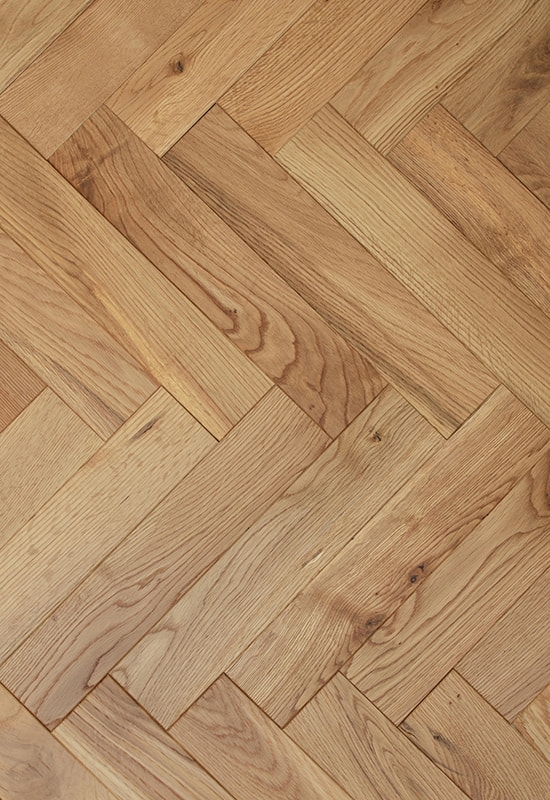
 Natural White Oak OA001-9 Engineered Wood Flooring PlankEngineered white oak plank with 2mm top layer, available in multiple widths and thicknesses; relevant for fastening and installation planning.View Product →
Core material matters as much as thickness. Plywood cores accept a cleat cleanly. HDF cores run denser, so a 16-gauge cleat may bend rather than seat properly, and some HDF products are specified for glue-down or floating installation only. Where nail-down is permitted on a thinner or denser plank, most mills ask for glue-assist: a bead of approved flooring adhesive in the groove, with fasteners holding the board until the adhesive cures. Width is the last variable. Planks wider than about 5 inches move more with seasonal humidity, and nail-only assemblies on wide planks are more likely to squeak or cup.
Cleats vs Nails vs Staples: A Side-by-Side Comparison
| Fastener | Gauge and length | How it holds | Main risk on engineered plank | Typical use |
|---|---|---|---|---|
| Angled cleat (L-head, barbed) | 16 ga, 1-1/2" to 2" | Barbed shank resists withdrawal; narrow head seats on the tongue | Over-driving shears the tongue; depth must be set per plank | 1/2" to 3/4" plywood-core plank, blind nailed |
| Straight finish nail | 16 ga, 1-1/2" to 2" | Friction plus adhesive; lower withdrawal resistance | Can wedge the board sideways and open a seam | 5/8" to 3/4" plank with glue-assist |
| Brad | 18 ga, 1" to 1-1/4" | Minimal grip; positions the plank | Too little holding power without full-spread adhesive | 3/8" plank, starting rows, tight corners |
| Staple | 15.5 ga, 1" to 2" | Two legs under a wide crown | Crown can fracture a thin tongue or cut fibres | 3/4" solid strip; rarely specified for engineered |
The pattern is consistent: as plank thickness drops, holding power shifts from the fastener to the adhesive, and the fastener's job becomes alignment rather than structural grip.
Matching Fastener Length to Plank Thickness
A simple rule covers most jobs: fastener length should be roughly twice the plank thickness, leaving at least 5/8 inch (16 mm) of shank in the subfloor after the fastener passes through the tongue. Too short and the plank lifts; too long and the fastener can break through the surface of a thin subfloor.
| Plank thickness | Fastener | Typical length | Subfloor penetration | Notes |
|---|---|---|---|---|
| 3/4" (18 mm) | 16 ga cleat | 2" | About 1-1/4" | Standard nail-down; spacing of 6" to 8" |
| 5/8" (15 mm) | 16 ga cleat | 1-3/4" to 2" | About 1" | Glue-assist recommended |
| 1/2" (12 mm) | 16 ga cleat or straight nail | 1-1/2" | 5/8" to 3/4" | Glue-assist; test on a scrap plank first |
| 3/8" (9.5 mm) | 18 ga brad plus adhesive | 1" to 1-1/4" | About 5/8" | Many mills specify glue-down or floating only |
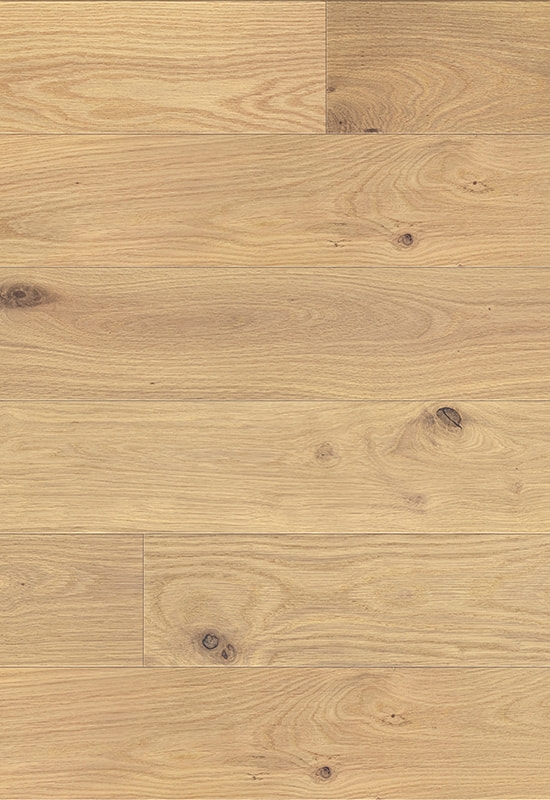
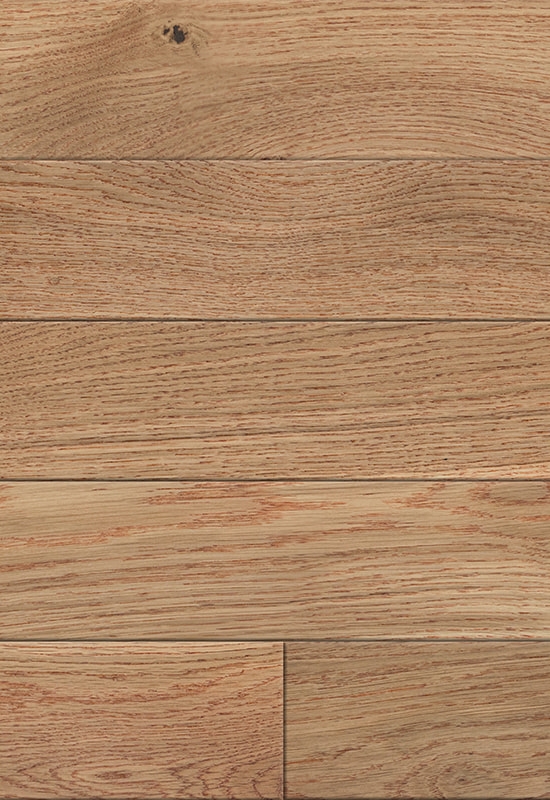
 Natural White Oak UV Lacquer HDF Wood Flooring OA001-7HDF-core engineered white oak flooring with UV lacquer finish; suited for living areas and useful for checking fastener and installation requirements.View Product →
Always drive two or three test fasteners into an offcut of the exact product before the first row goes down. Over-driving and tongue fracture are visible immediately on a scrap plank and expensive to discover under a finished floor.
Site Conditions That Override the Fastener Decision
If the installation method itself is still open, a closer look at floating, glue-down, and nail-down assemblies for engineered flooring will help frame the trade-offs. The conditions below decide whether nail-down is even on the table.
- Subfloor material. Plywood or OSB at least 3/4 inch thick, or a nailed plywood layer over concrete sleepers. A bare slab means glue-down or floating.
- Flatness. Commonly 3/16 inch in 10 feet. Cleats cannot pull a low spot up to the plane of the floor.
- Moisture. Subfloor readings within about 4 percentage points of the flooring; concrete below 4.5 percent on a calcium chloride test or 75 percent relative humidity.
- Radiant heat. Nail-down risks puncturing tubing. Glue-down and floating are the standard answers.
- Acclimation. Plank and subfloor should be at service moisture before the first cleat is driven.
Skip any one of these and the cleat-versus-nail debate becomes irrelevant, because the failure will not come from the fastener.
When Nails Are the Better Answer
- 3/8-inch engineered plank. Usually too thin for a 16-gauge floor nailer; an 18-gauge brad plus full-spread adhesive is a common assembly.
- Tight spots. Starting rows, final rows, and door casings are hand-nailed or brad-nailed, then face-nailed and filled with a matching wax stick.
- Fragile or brittle tongues. Older stock, or a tongue already nicked during handling, may split under a cleat. Pre-drill and hand-nail instead.
- Adhesive-carrying assemblies. When glue does the structural work, brads only hold alignment, and a thinner fastener is safer for the tongue.
A Buyer's Checklist Before You Order Fasteners
- Confirm plank thickness and core type from the specification sheet, not from the sample board label.
- Confirm the mill permits nail-down for that product, and note any glue-assist requirement.
- Match gauge and length: 16-gauge cleats for 1/2-inch and thicker plywood-core planks, 18-gauge brads for 3/8-inch, staples only where a mill explicitly allows them.
- Verify subfloor flatness and moisture readings, and record the values for the project file.
- Test fasteners on an offcut and check for over-drive or tongue fracture.
- Set nailer depth and fit the shoe or nose adapter to the plank thickness.
- Keep spacing at 6 to 8 inches along the plank and 2 to 3 inches from each end, and specify glue-assist on wide planks.
The choice between cleats and nails is not a choice between two equivalent fasteners. Cleats displace and grip, nails mostly position, staples cut. For engineered hardwood between 1/2 inch and 3/4 inch over a plywood subfloor, a 16-gauge cleat with glue-assist produces the fewest callbacks. For 3/8-inch plank, adhesive carries the load and brads simply keep the pattern straight.
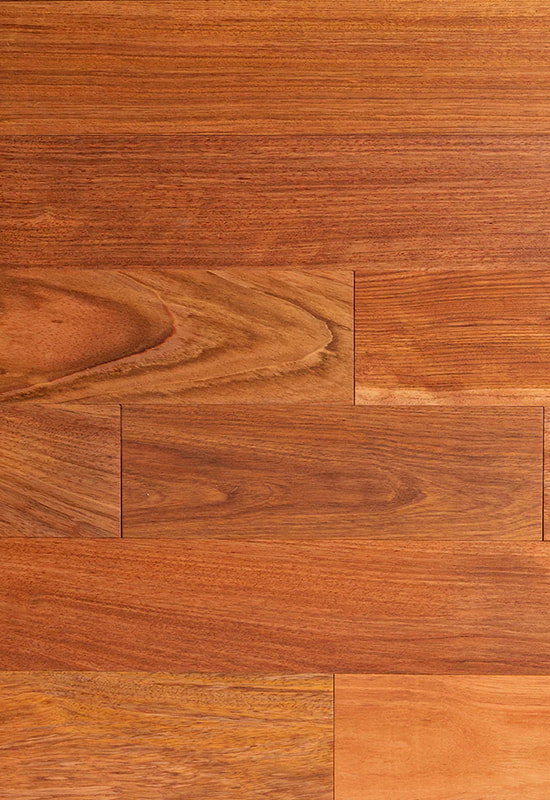
 Plank Engineered Wood Flooring Category RangeCategory of engineered wood plank flooring with various species, finishes, and installation methods; compare options before selecting fasteners and adhesives.View Product →
Because the answer depends on the specific construction of the plank, it is worth pairing the fastening decision with the product data. You can review our manufacturing background and testing procedures for the full picture, then match fastener, spacing, and adhesive to the exact plank you are buying.

 +86-572-2118015
 No.598. Gaoxin Road, Huanzhu Industrial Zone, Huzhou City, Zhejiang Province, China, 313000