

 Eng
Eng  English
 中文简体
中文简体 Français
Content
Pet urine attacks a wood floor in two ways at the same time. The first is water: urine is roughly 95 percent moisture, and liquid sitting on a floor migrates into seams, bevels, and any break in the finish. The second is chemistry: urea and uric acid leave crystals that keep releasing odor long after the surface looks dry, while ammonia reacts with tannins in white oak and turns a pale puddle mark into a grey-black ring.
Timing decides the outcome more than any product does. Urine caught and dried within 20 minutes usually leaves nothing behind on a sealed floor; the same spill left overnight can lift a finish edge, stain the wood underneath, and cup the plank. The sequence below covers both cases: a fresh accident, and a mark you discover days later.
What Pet Urine Does to a Hardwood Floor
Surface contact and residual odor
On a sealed floor, the first stage is reversible. The finish holds the liquid, and a blot plus a mild cleaner removes almost all of it. What stays behind is uric acid bound to the film — invisible, dry, and still releasing odor. That is why a room can smell near the baseboard even when you cannot find a visible mark.
Seam wicking and finish edge lift
Water takes the lowest-resistance path: the seams between planks, the bevels, and nail or staple holes. Once liquid enters a seam it moves sideways into the core, and the finish edge can loosen. You see the result as a slightly raised line or a dull halo running along the joint.
Tannin reaction and cupping
White oak and other tannin-rich species react with the alkaline ammonia in urine. The stain then darkens over several days, often into a ring with a darker rim. At the same time, the wet side of each plank swells more than the dry side, so edges rise — the defect known as cupping. Beyond 24 to 48 hours, moisture can reach the subfloor, and the odor source is no longer the floor surface at all.
Emergency Cleanup: The First 20 Minutes
Work from the outer edge of the puddle toward the center so you do not spread it. Keep a stack of white cotton towels or heavy paper towels near the spot where accidents usually happen.
- Blot, do not rub. Press a folded towel down with your palm or stand on it for ten seconds. Rubbing pushes liquid into the grain and drives it deeper into the seams.
- Swap in dry towels. Change cloths until a fresh towel picks up no more color. Never reuse a saturated towel on the same spot.
- Neutralize with a 1:1 mix of distilled white vinegar and water. Mist lightly, leave five minutes, then blot dry. Vinegar is mildly acidic and cancels ammonia odor, but it does not break down uric acid crystals, so treat it as a first response rather than the final step.
- Apply an enzymatic cleaner and respect the dwell time on the label, usually 10 to 15 minutes. Keep the surface damp, never flooded. Enzymes digest the uric acid that a neutral cleaner leaves behind.
- Dry actively for 12 to 24 hours with a fan and, in humid weather, a dehumidifier. Skip hair dryers on high heat, which can cloud a lacquer film and open seams. A step-by-step routine for coated floors is set out in this maintenance guide for engineered floors.
- Recheck with your nose after 24 hours. Smell close to the seam and the baseboard rather than at arm's length. Odor that comes back means the liquid reached the core.
Matching the Cleaning Method to the Finish
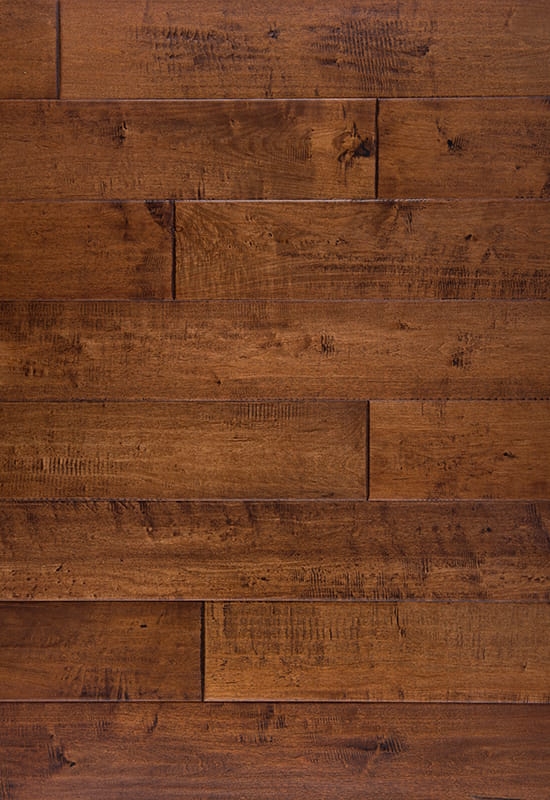
The safe cleaning window is set by the finish system, not by the type of pet. A heavily brushed or handscraped surface holds liquid in its texture and behaves quite differently from a smooth, fully sealed plank.
| Finish system | Standing-liquid tolerance | Best first response | Main risk if left wet |
|---|---|---|---|
| Factory UV-cured lacquer or aluminum oxide (engineered and HDF planks) | High: 30 to 60 minutes without penetration | Blot, then pH-neutral cleaner; enzyme on odor | Dull patches from abrasive pads or aggressive degreasers |
| Site-applied polyurethane | Medium to high: 15 to 30 minutes | Blot, damp cloth, mild soap | Ammonia-based cleaners soften the film over repeated use |
| Hardwax oil or penetrating oil | Low: seconds to a few minutes | Dry blot, then re-oil the spot after drying | Liquid follows open pores and requires local re-oiling |
| Wax finish | Low | Dry blot and buff; avoid wet cleaners | Water rings form in the wax and urine sits in the wax layer |
| Invisible lacquer, matte open-pore | Medium | Dry blot, then damp microfiber | Pigment and odor trapped in a visible pore structure |
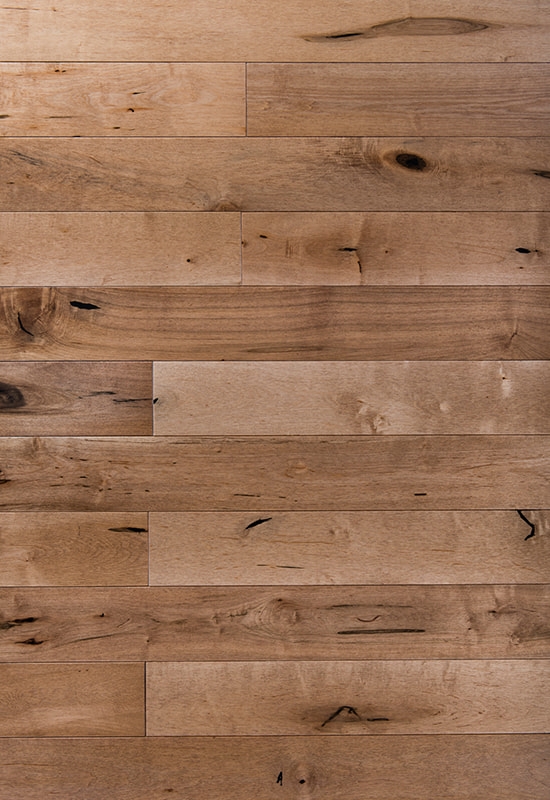
A factory-finished engineered plank with a continuous UV-cured film is the most forgiving surface in a pet household, because the film resists liquid long enough for you to act and the wear layer can be recoated without sanding the whole floor. A natural white oak plank with a fully sealed surface keeps the realistic cleanup window in the 30-minute range instead of seconds.
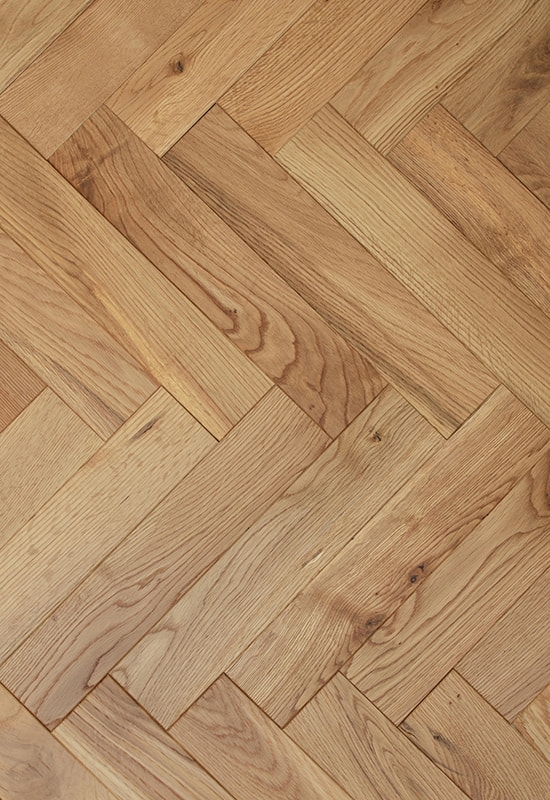
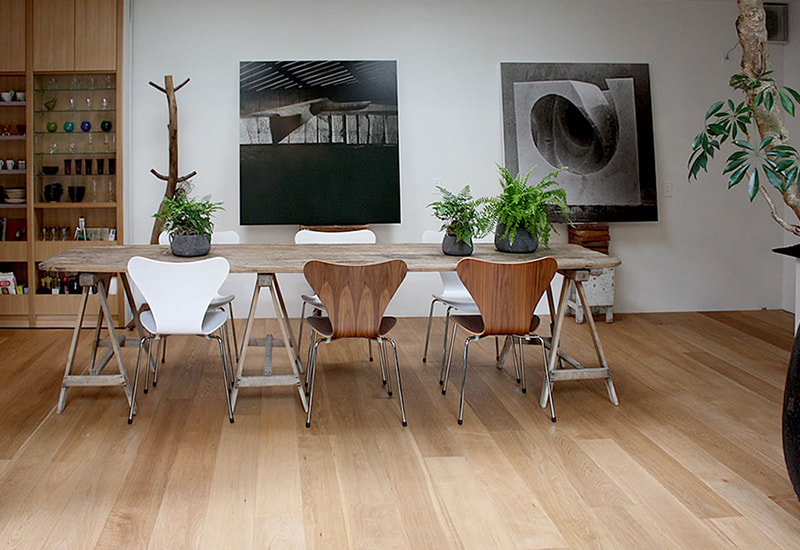 Natural-White OakBrevel: Standard Bevel TypeView Product →
Removing Odor Without Damaging the Wood
What works
- Enzymatic cleaners on cured finishes: dwell per the label, then wipe with a damp microfiber cloth.
- Baking soda for absorption: sprinkle, leave 15 minutes, vacuum. As a paste it can leave residue in bevels and grain.
- Three percent hydrogen peroxide, only on bare unfinished wood or after a spot test on a light finish; it can bleach a darker stained surface.
- Oxalic acid wood bleach for tannin rings — on bare, sanded wood only, never over a topcoat.
What to avoid
- Steam mops: heat and moisture push residue deeper and can lift finish edges.
- Ammonia-based all-purpose cleaners: they add the compound you are trying to remove and react with tannins.
- Chlorine bleach: it bleaches the wood itself, producing a light patch that no later cleaning will reverse.
- Flooding the floor: on an oiled surface, a wet film lasting more than five minutes is a repair job, not a cleanup.
When the Stain Has Gone Deeper
If the mark has darkened and the surface feels flat, the stain sits in the wood rather than the film. Two routes remain.
Sanding and refinishing. A full sanding removes roughly 0.5 to 1 mm of surface. A solid plank of 18 to 20 mm can take several sandings over its life; an engineered board with a 2 mm sawn wear layer can take one or two; a 0.6 mm veneer cannot be sanded at all. After sanding, oxalic acid can pull out the last of a tannin ring before the new coat goes on.
Board replacement. Choose this when edges have cupped by more than about 1 mm, the core has delaminated, or the stain reaches the tongue. Replacement boards need three to five days of acclimation in the room, a color and batch match, and careful cutting along the seam so neighboring planks stay intact.
A smooth, flat solid plank such as a 90 mm white oak strip is easier to keep clean and easier to refinish than a deeply textured surface, because no grooves exist for liquid to sit in.
Specifying Floors for Pet-Heavy Households
For importers, contractors, and retailers, pet ownership changes the specification conversation. Buyers in pet-heavy residential markets tend to prioritize a continuous sealed film rather than an oiled finish, smooth surface textures over deep brushed or handscraped profiles, tighter bevels that hold less liquid, a 2 to 3 mm wear layer for future recoating, and a core that tolerates occasional moisture, such as HDF or plywood, in hallways and utility areas.
As a wood flooring manufacturer working with international buyers, we build these specifications into solid, engineered, and HDF constructions, and we supply the care documentation that states which cleaner chemistry and dwell time each finish tolerates — usually the deciding factor in whether an end user damages the floor or simply cleans it.
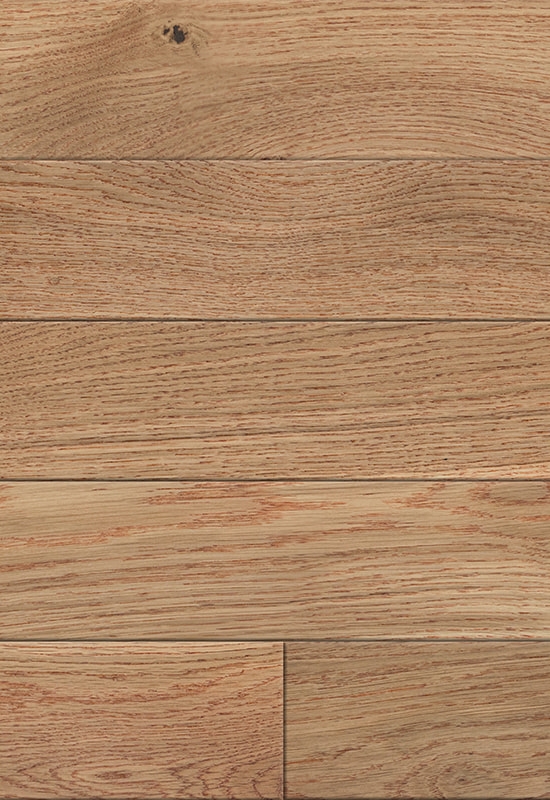
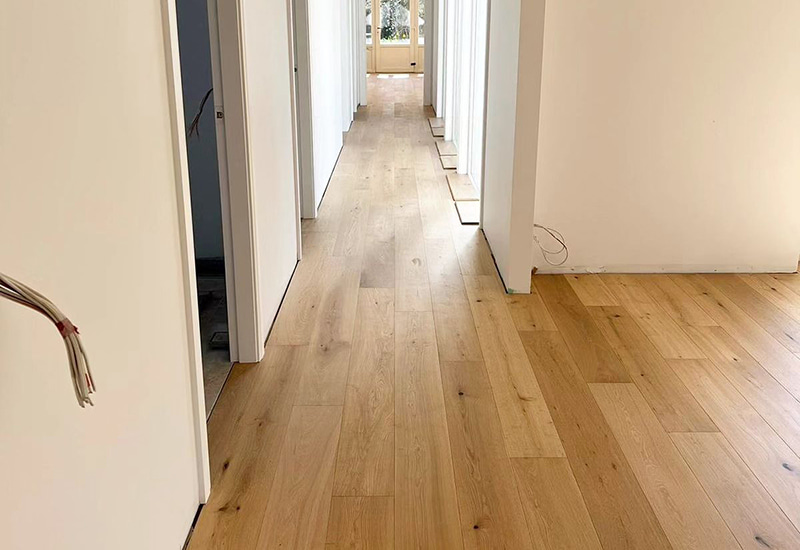 Natural-White OakBrevel: Standard Bevel TypeView Product →
Prevention That Actually Reduces Repeat Accidents
- Place a waterproof mat under water bowls and a washable pad at the door the dog uses most.
- Wipe within minutes, not hours; a towel kept within reach removes the temptation to postpone.
- Top up the finish every three to five years. Worn spots are the entry point for every deep stain.
- Inspect seams with a flashlight held at a low angle; early edge lift appears as a thin shadow line.
- For a puppy or an older incontinent dog, choose sealed engineered planks and keep spare boards from the same production batch for future replacement.
Pet urine on hardwood is a small problem while it stays on the surface and an expensive one once it is inside the seam. Blot, neutralize, add enzymes, dry with air movement, and inspect again at 24 hours. If a mark survives all of that, the question shifts from cleaning to sanding or replacing a board — and that decision depends on how much wear layer the floor actually has.

 +86-572-2118015
 No.598. Gaoxin Road, Huanzhu Industrial Zone, Huzhou City, Zhejiang Province, China, 313000