

 Eng
Eng  English
 中文简体
中文简体 Français
Content
Charred plywood flooring covers two products that share a keyword and almost nothing else. The first is a sheet of construction plywood burned on site with a propane torch, brushed back and sealed by hand — the budget floor that fills DIY forums and mood boards. The second is an engineered floor with a plywood core and a deliberately carbonized wear layer, charred under controlled heat and finished to a written specification.
Both read as near-black wood at a glance. Only one is normally expected to hold that colour through underfloor heating, heavy furniture, a spill and a refinish ten years later. Knowing which one a supplier is quoting is the difference between a distinctive floor and an expensive experiment.
Two Products Behind One Keyword
The DIY route is straightforward to describe: 18 mm sanded plywood, torched with a propane or MAPP torch until the face veneer carbonizes, brushed with a brass brush, then sealed with two or three coats of oil-based polyurethane or hardwax oil. Material cost is low, labour is high, and the finished floor suits a workshop, a cottage or a rental where a rustic, uneven surface is part of the appeal. What it does not suit is a project with a fixed delivery schedule, a colour reference and a warranty.
The factory route produces the same visual language on a repeatable basis. A 15 mm engineered plank with 7 to 9 cross-laminated plies and a 2 to 4 mm white oak wear layer is carbonized or smoked in a kiln or under a controlled burner bank before the finish line, not with a hand torch on a laid floor. Colour, char depth, gloss and finish thickness are held to a tolerance and reproduced across an order of several thousand square metres — the requirement that separates an importer's specification from a weekend project.
Where the black surface comes from
The aesthetic traces back to yakisugi, the Japanese practice of burning cedar cladding. Three boards were bound into a triangular chimney, burned from the inside, extinguished, brushed and oiled. The original purpose was durability and insect resistance on exterior siding, not decoration, and the substrate was always solid timber. Plywood was never part of the tradition, which is worth remembering when a listing offers "shou sugi ban plywood" as though the two words described the same thing.
Why Plywood Behaves Differently Under a Torch
Carbonizing a wood surface means driving it past roughly 250 to 300 °C until the cell walls turn to carbon. On solid oak that heat has nowhere to go but deeper into the wood. On plywood, a glue line can sit as little as 1.5 mm below the face veneer, and adhesive families tolerate heat very differently. Interior urea-formaldehyde and melamine-urea glues soften and can delaminate once heat and moisture reach them; phenol-formaldehyde, the exterior-grade adhesive, is far more heat- and moisture-resistant. A torch head parked in one spot is the fastest way to destroy a plywood panel, and the damage usually appears as a blister or a lifted veneer weeks after installation, not during the burn.
Plywood's advantage is not heat resistance — it is dimensional stability. Cross-lamination cancels most of the seasonal movement that solid wood shows, which is why plywood-core engineered planks dominate wide-plank and underfloor-heating specifications. The table below sets out what each substrate realistically delivers once the surface is black.
| Substrate | Behaviour when the surface is charred | Stability and refinishing | Realistic use |
|---|---|---|---|
| Torch-treated 18 mm construction plywood | Face veneer chars in seconds; the glue line sits 1.3–1.8 mm below the flame | Edge joints swell with any spill; not refinishable; fixings telegraph through | Utility rooms, workshops, temporary or low-budget floors |
| Engineered plank, plywood core, 3–4 mm oak wear layer | Carbonized in a kiln or burner bank before assembly; heat never reaches the glue line | Cross-lamination limits movement; refinishable two to three times | Wide planks, underfloor heating, residential and light commercial |
| Engineered plank, HDF core | Factory smoked or carbonized finish only — an HDF core cannot be torched on site | Very flat and stable; click systems available; thinner refinishing margin | Floating installations and projects specifying a lock system |
| Solid wood, thermally carbonized | Colour runs through the full thickness; no glue line to protect | Moves with relative humidity; refinishable several times | Hand-scraped looks, nail-down installation, heritage interiors |
Producing a Uniform Charred Surface
Whether the work happens in a factory or on site, six variables decide whether the result looks engineered or improvised.
- Condition the material. Aim for 7–9 % moisture content before any flame touches the surface. Plywood pulled off a truck at 12 % will cup, because the face dries faster than the core.
- Sand, but do not seal. 100–120 grit removes mill glaze and gives an even burn. Sanding sealer or an existing lacquer coat scorches in patches and leaves a mottled face.
- Torch in one direction. A propane torch with a rosebud head, kept moving, aimed just ahead of the finished area. Hold the flame long enough to reach a uniform coffee-to-black tone; hold it still and the face veneer lifts off the glue line.
- Brush along the grain. A nylon brush leaves a light char and a nearly flat surface; a brass brush opens the spring and summer wood for the deeper relief associated with yakisugi. Vacuum the carbon; never wipe it off with a wet cloth.
- Seal in thin coats. Penetrating hardwax oil needs two to three coats with 8–12 hours between them; two-component polyurethane needs two. Carbon dust is a bond breaker, so vacuum and tack between coats.
- Cure before loading. Allow 24–72 hours depending on the finish. An oiled charred floor marks easily in its first days, and furniture dragged across it leaves permanent lines.
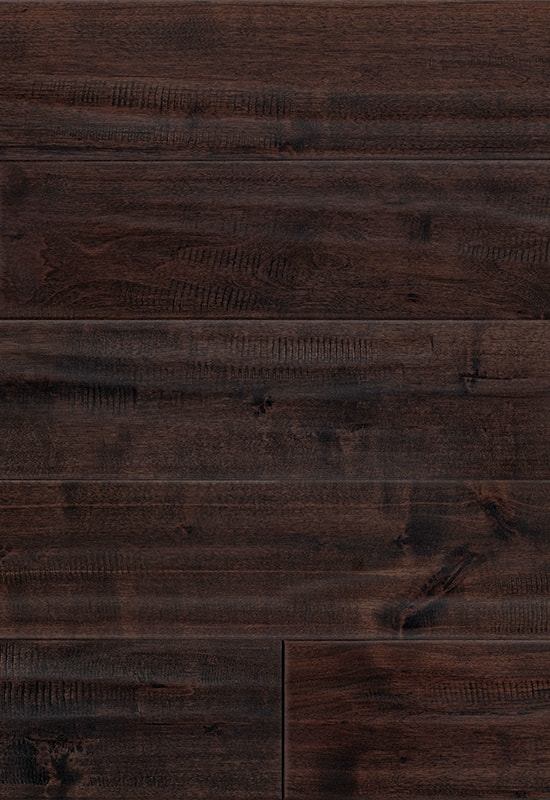
Factory versions of the same look, such as a dark smoked white oak plank, are carbonized and sealed under controlled conditions, which is what makes the colour repeatable across several containers. For a wider view of how carbonized, smoked, brushed and hand-scraped surfaces differ in maintenance terms, see this guide to wood floor surface finishes.
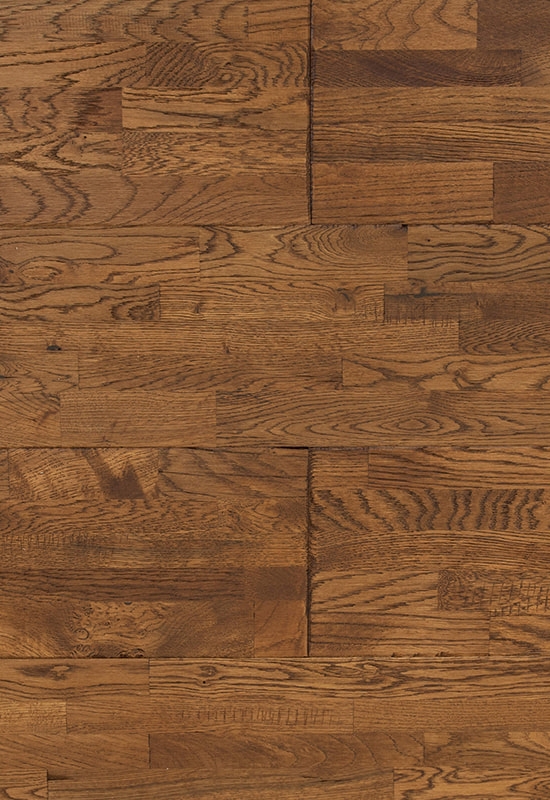
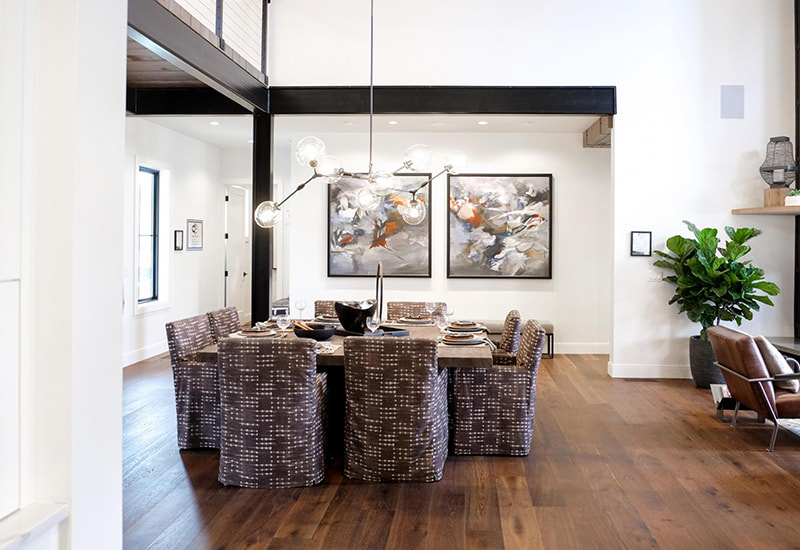 Dark Smoked-White OakBrevel: Standard Bevel TypeView Product →
Performance, Cleaning and Where Charred Floors Fail
A charred surface is a finish, not a hardening treatment. Expectations that a burned floor will resist dents better than a natural-finish floor of the same species are unfounded; the carbon layer is friable and the Janka rating of the wood underneath still governs impact resistance. The following points cause most of the complaints that reach manufacturers after handover.
- Scratches read as light lines. On a near-black surface the contrast is high, and a spot repair with oil produces a darker patch that takes weeks to blend.
- Cleaning must be dry-first. Use a pH-neutral cleaner and a damp — never wet — mop. Steam and abrasive pads strip the charred layer edge by edge.
- Underfloor heating needs lower set points. Dark surfaces absorb radiant heat, and most wood floors should stay at or below about 27 °C (81 °F) at the surface.
- Expect a colour shift. Carbon itself is light-stable, but oiled surfaces amber slightly during the first year. Approve a physical sample rather than a photograph.
- Maintenance is scheduled, not optional. Re-oil every 12–24 months in a home and every 6–12 months in retail or hospitality traffic.
What to Write Into a Purchase Order
Because "charred" describes a look rather than a standard, the specification has to carry the technical content. These are the line items that prevent a colour, performance or compliance dispute later.
- Species and wear layer. White oak is the default for carbonized work because of its closed grain and consistent tannin response. Specify wear layer thickness: 2 mm minimum for a floor that will be refinished, 4 mm for commercial traffic.
- Core and adhesive. Plywood core with 7–9 plies and exterior-grade phenol-formaldehyde adhesive, plus formaldehyde compliance to CARB Phase 2 or EPA TSCA Title VI.
- Finish callout. "Carbonized", "smoked" and "torched" are not interchangeable. Ask the supplier to state the process, the char depth range and the finish system — oil, invisible lacquer or UV lacquer.
- Colour reference. Approve a physical sample under D65 lighting and keep one on file. Screens and print catalogues misrepresent black-browns.
- Dimensional tolerances. Thickness ±0.5 mm, width and length ±0.3 mm, moisture content 7–9 %, and a micro-bevel of 0.5–1 mm if the joints should read as lines.
- Documentation. FSC or PEFC chain of custody, Lacey Act due-care records for the United States and EUDR geolocation statements for Europe.
JESONWOOD, a wood flooring manufacturer in Huzhou, Zhejiang, produces solid, engineered and HDF-core floors at a 40,000 m² plant with a monthly pre-finished capacity of 80,000 m² and 15 years of export production. Certification covers JAS, CE, UKCA, FSC, PEFC, ISO and the Välinge click licence, and an in-house materials legality department documents Lacey Act and EUDR compliance at the point of purchase — the paperwork that most carbonized-floor enquiries eventually require.
Patterns and Interiors Where Charred Surfaces Work
Plank format keeps a dark floor calm and lets the grain carry the surface; a micro-bevel makes the joints legible without breaking the colour field. Herringbone and chevron shift the emphasis to geometry, and because a carbonized surface suppresses the contrast between individual boards, the pattern reads as a single textured plane rather than a patchwork. That consistency is why parquet formats in carbonized white oak are typically specified for retail, hospitality and feature living areas where the floor is a design element.
Practical pairings follow the same logic. Charred floors absorb light, so pale walls, warm textiles and directed lighting keep a room from closing in. In wet or high-traffic zones, keep the charred surface for dry areas and continue the tone with a matching engineered plank in kitchens and hallways.
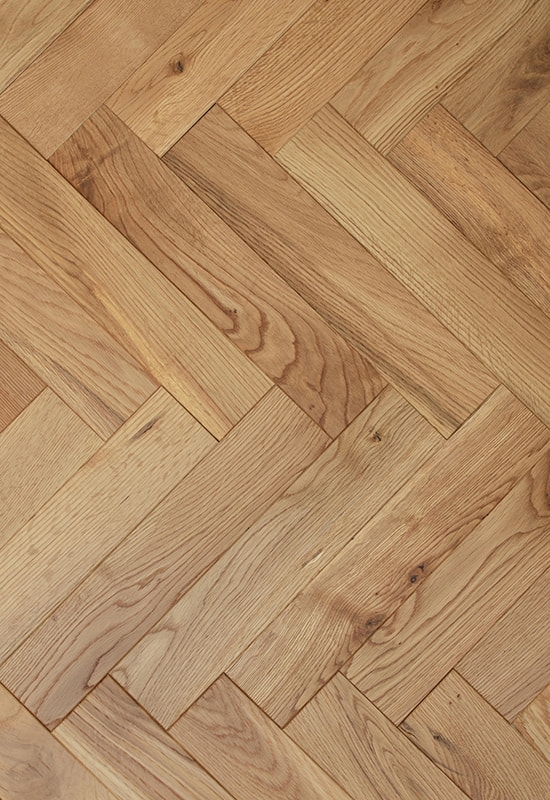
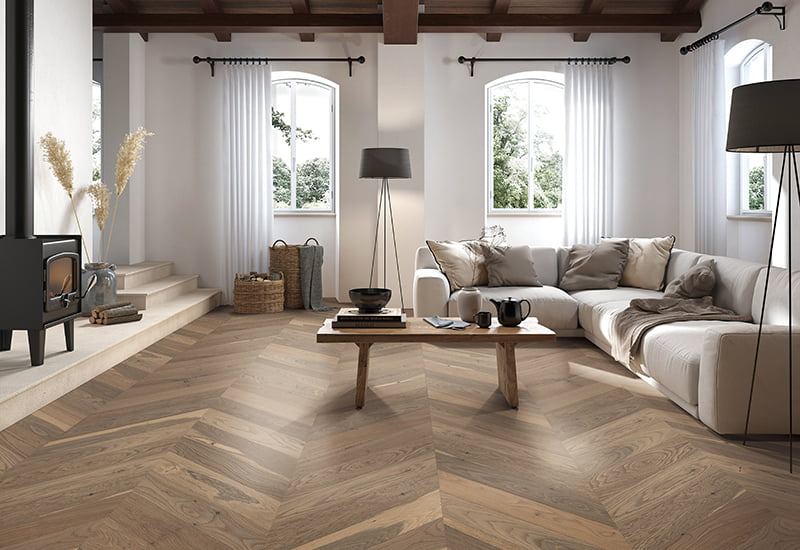 Carbonized Natural-White Oak Chevron 45°Brevel: Standard Bevel TypeView Product →
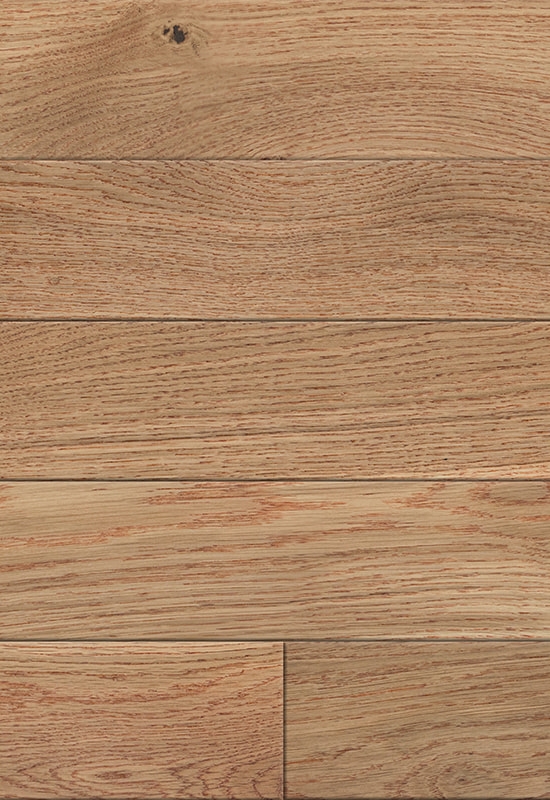
 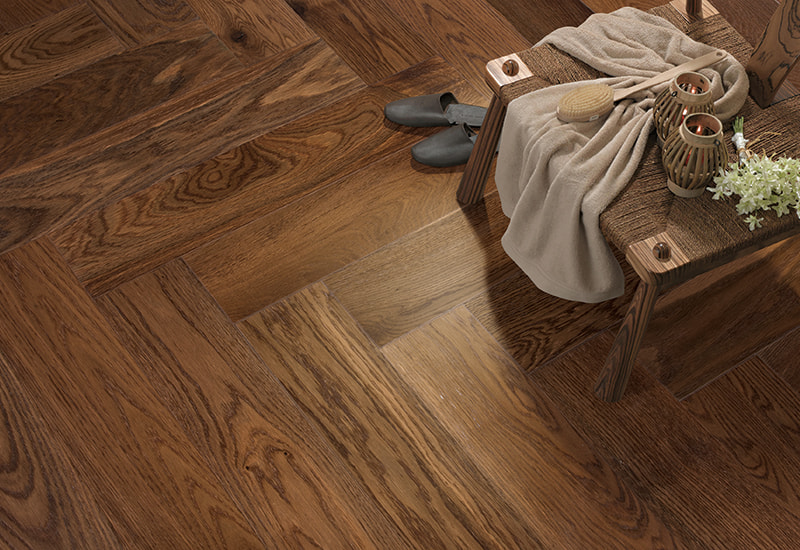 Carbonization-White OakBrevel: Standard Bevel TypeView Product →
Charred plywood flooring is best understood as a surface finish applied to a substrate, and the substrate decides whether the floor survives its first heating season and its first spill. A torched sheet of construction plywood is a legitimate low-cost option for a workshop or a temporary floor; a plywood-core engineered plank with a carbonized wear layer, exterior-grade adhesive and a documented finish system is what belongs in a specification with a colour reference, a tolerance table and a compliance file. Order a physical sample, confirm the process in writing, and match the finish system to the traffic the floor will actually see.

 +86-572-2118015
 No.598. Gaoxin Road, Huanzhu Industrial Zone, Huzhou City, Zhejiang Province, China, 313000