

 Eng
 English
 中文简体
 Français

Content
Hardwood grade is one of the most misread terms in wood purchasing. A distributor may quote FAS, a retailer may advertise Select, and a flooring catalogue may use AB or ABCD, yet those labels do not answer the same question. For buyers, the practical issue is not which grade sounds best; it is whether the grading language matches the product, the visible face, and the tolerances in the purchase order. This guide separates lumber grades from flooring grades and shows where appearance, yield, and sourcing risk change.
Lumber Grades and Flooring Grades Are Different Systems
Hardwood lumber grading evaluates how much clear, usable cutting area a rough board can yield after defects are removed. It is a yield grade. It says little about finish, moisture content, or machining precision. Flooring grading, by contrast, usually describes the face appearance of finished boards: how many knots, mineral streaks, sapwood, checks, and colour variations are tolerated. A “Select” floor and “Selects” lumber are not interchangeable claims.
This distinction matters because a floor mill can buy No.1 Common lumber and produce a clean-looking floor if it cuts around defects. It can also buy FAS lumber and create a deliberately rustic floor. Grade claims should therefore be tied to the finished face, not only to the raw material.
| Label family | Typical use | What it usually signals | Buying check |
|---|---|---|---|
| FAS / Selects (lumber) | Moulding, cabinetry, high-yield components | Large clear cuttings; fewer defects over long lengths | Confirm face, width, and grading edition; FAS does not mean defect-free on both faces |
| No.1 Common (lumber) | Furniture, flooring blanks, general millwork | Balanced yield with visible knots and colour variation | Check cutting yield and defect placement |
| No.2A / 2B Common (lumber) | Rustic flooring, pallets, utility work | More knots, mineral, and shorter clear sections | Confirm 2A versus 2B; visual result can vary widely |
| Clear / Select (flooring) | Uniform residential and hospitality interiors | Minimal knots and colour shift | Approve the finished face; grade is not a wear warranty |
| #1 Common / Character (flooring) | Natural homes, retail, hospitality | Visible character with structure | Agree defect map and batch consistency |
| #2 Common / Rustic (flooring) | Barn, cottage, feature floors | High variation, knots, mineral streaks | Set filler colour, knot size, and replacement allowance |
| AB / ABC / ABCD / CD (manufacturer) | Retail and project specifications | Proprietary appearance bands | Get a written definition and a physical sample |
The table is a map, not a contract. Manufacturer labels such as AB or CD are especially dependent on the supplier's written definition, sample approval, and batch controls.
Hardwood Lumber Grades: FAS to Common
Lumber grades originated in the North American hardwood trade and are still used in export contracts and mill purchasing. The logic is cutting yield, not beauty. A board with a large clear area can produce long components with less waste, so it earns a higher grade even if its colour is uneven.
- FAS: the top grade for long clear cuttings. A common rule of thumb is boards at least 6 in wide and 8 ft long with 83 1/3% clear cuttings.
- FAS 1-Face: one face meets FAS while the reverse may be lower. It suits work where only one face remains visible.
- Selects: clear material in shorter or narrower boards. It is often a practical choice when FAS size is unnecessary.
- No.1 Common: the workhorse grade, with more knots and colour variation but a useful clear yield.
- No.2A and 2B Common: progressively more character and shorter clear sections. These grades suit rustic flooring and utility work.
- No.3A and 3B Common: the lowest common grades, with limited clear cuttings and the highest visual variation.
Percentages and minimum sizes can differ by grading agency and rulebook edition. Name the authority and edition in the specification; a grade without that reference is open to interpretation.
Flooring Grades: AB, ABC, ABCD, and CD
Flooring grades are usually mill-specific appearance bands. They describe the visible face after manufacturing: knot size, filler, mineral streak, sapwood, colour range, and the acceptable frequency of natural features. They are not a measure of hardness, finish wear, or structural performance.
These labels are not universal. A European buyer may see Prime, Select/Classic, Natural, and Rustic; a US buyer may see Clear, #1 Common/Character, and #2 Common/Natural Rustic. The same words can shift by supplier, so the approved sample and the defect definition matter more than the label alone.
For engineered products, grade describes the face veneer, not the core. Check core type, wear layer, finish system, and click or tongue-and-groove profile. The engineered wood flooring range shows how plank, herringbone, and chevron formats are organised separately from species and surface treatment.
How Grade Interacts With Species, Finish, and Format
Species changes what a grade looks like in practice. White oak tends to show knots and mineral streaks against a pale background; hickory can carry strong colour variation; acacia, merbau, and jatoba may show interlocked grain and mineral lines. A “rustic” grade in one species may look calmer or busier than the same name in another. Grade also does not predict hardness or dimensional stability; those depend on species density, construction, moisture content, and installation conditions.
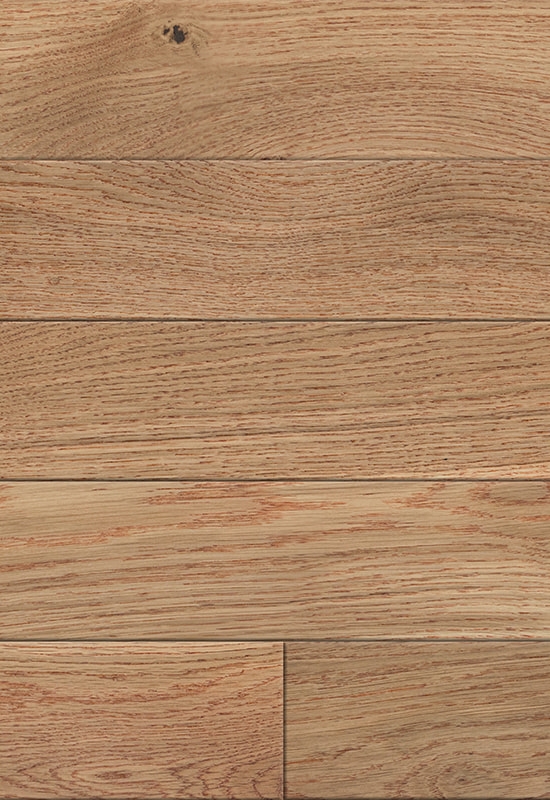
A clean natural white oak plank is often specified when the grade should read quiet rather than rustic. In that case, the buyer should approve not only the knot limit but also the colour spread and the amount of sapwood allowed.
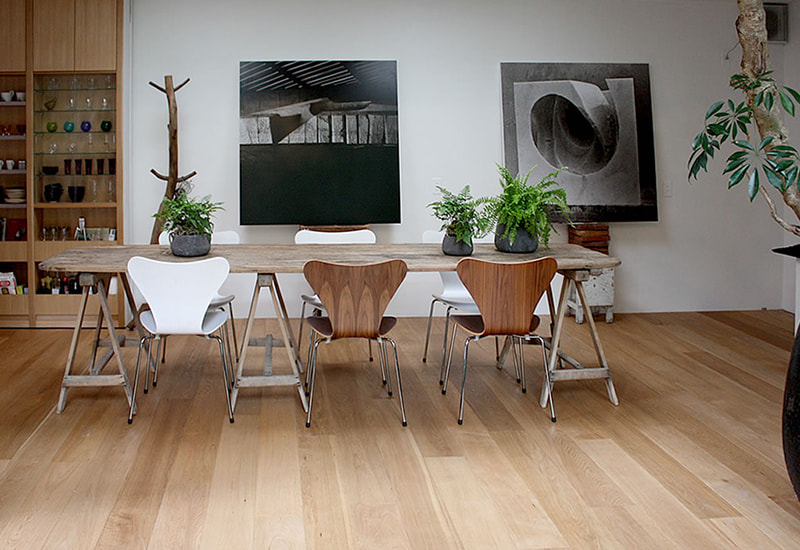 Natural White Oak OA001-9 Light-Brushed Engineered PlankEngineered white oak plank in ABC grade with light brushing and UV oil; check colour spread and sapwood for a quieter floor.View Product →
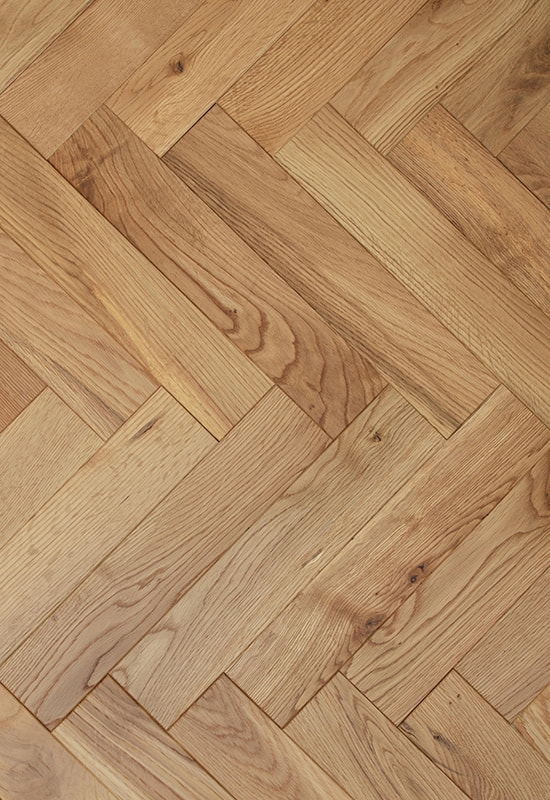
Pattern amplifies grade. Herringbone and chevron cut planks into short, angled pieces, so knots, colour shifts, and end-match problems repeat across the floor. A batch that looks acceptable in a single straight plank can become visually noisy in a pattern. Buyers should approve a laid-up sample, not only individual boards.
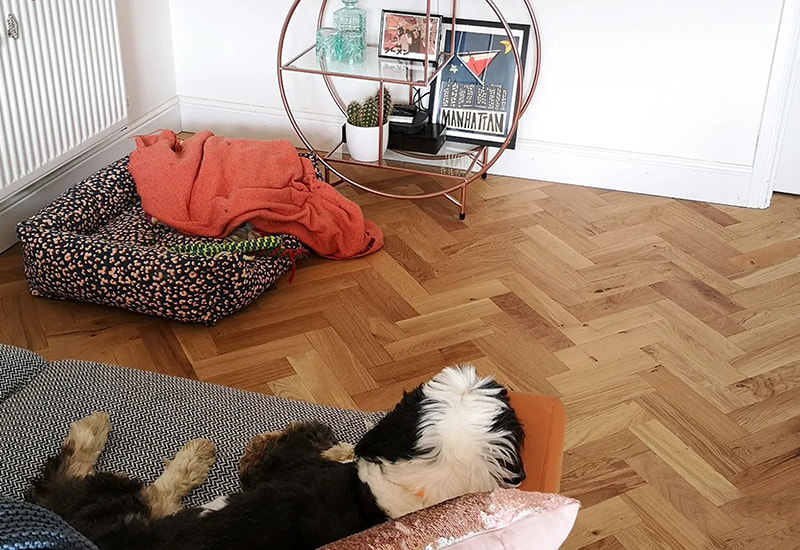 White Oak Natural Herringbone Engineered Flooring OA001-7Engineered white oak herringbone with a 3mm top layer and light brushing; review a laid-up sample for colour, knots and end matching.View Product →
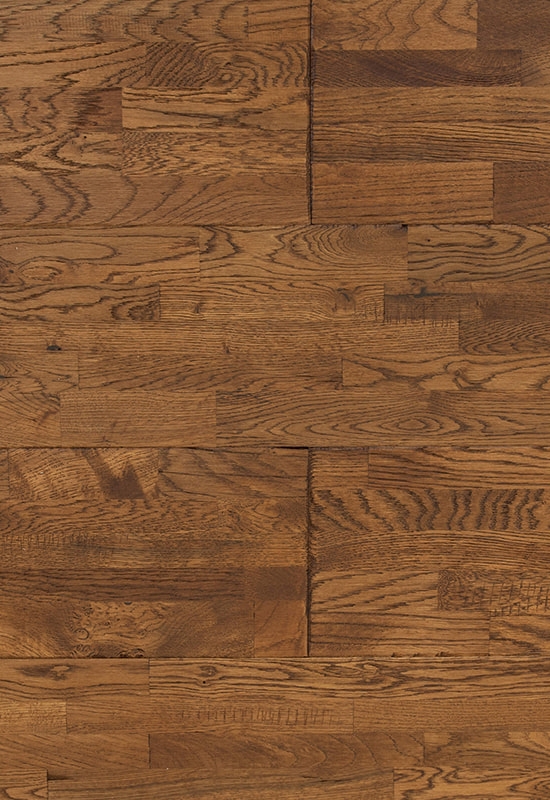
Solid flooring puts the same grade question under a different light. A solid white oak board exposes the full face, and surface treatments such as brushing or hand-scraping can either soften or emphasise natural features. Engineered and HDF constructions can use a cleaner face veneer over a stable core, but the core and wear layer still need separate approval.
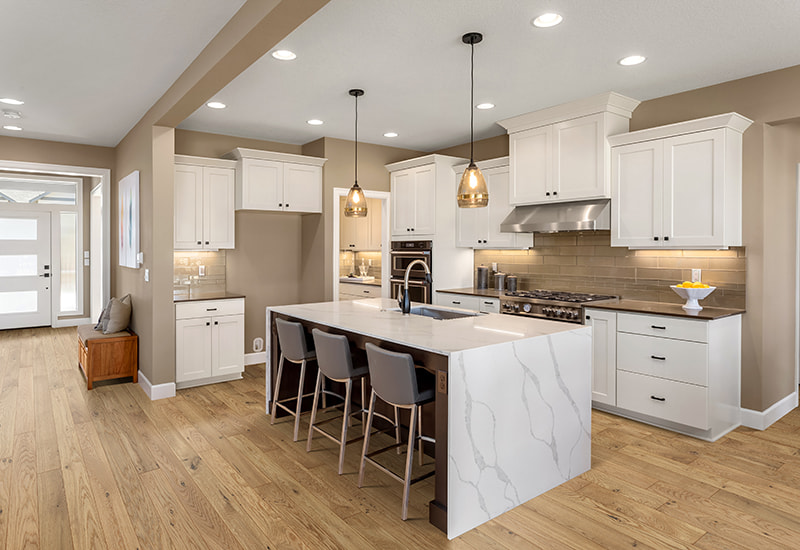 White Oak 90 Brushed Solid Wood FlooringSolid white oak in ABCD grade with a brushed surface and UV lacquer, available in several colours; inspect full-face colour and grain variation before specifying.View Product →
Written Specifications Reduce Grade Disputes
A grade name alone is a weak specification. The following items should be written into the purchase order or technical sheet:
- Grading system and edition: lumber grade, flooring grade, or manufacturer band.
- Face sample: an approved physical sample with defect limits, colour range, and gloss level.
- Defect tolerance: maximum knot size, filler colour, mineral streak allowance, and sapwood limit.
- Construction: solid, engineered, or HDF; core material; wear layer; profile.
- Moisture and packaging: target moisture content, acclimation instructions, and carton marking.
- Compliance evidence: species declaration, FSC/PEFC where required, and due-diligence records for Lacey Act or EUDR markets.
Compliance is not a grade issue, but it belongs in the same purchase file. A floor can be visually correct and still fail a sourcing review if species or origin evidence is incomplete. JESONWOOD's sustainability and compliance information is relevant here because legality and chain-of-custody documents are separate from appearance grading.
A Practical Grade Decision for Buyers
Use grade as a visual and yield decision, not as a proxy for quality. A hotel corridor may need a controlled character grade so replacement boards match; a residential open-plan room may accept #1 Common character for warmth; a budget rental or feature floor may use #2 Common rustic deliberately, provided the defect map and replacement allowance are agreed. For pattern floors, tighten the colour and defect tolerance because repetition is more visible.
Before approving a grade, compare three things: the finished face sample, the construction data, and the batch consistency record. If a supplier cannot define the grade in writing, the buyer is not buying a grade; the buyer is buying an interpretation. That is the real sourcing risk behind the many grades of hardwood.

 +86-572-2118015
 No.598. Gaoxin Road, Huanzhu Industrial Zone, Huzhou City, Zhejiang Province, China, 313000
