

 Eng
Eng  English
 中文简体
中文简体 Français
Content
- 1 Start with project conditions before discussing style
- 2 Recommend wood floor type based on performance, not only preference
- 3 Match wood species to wear level and customer expectations
- 4 Use grade, color, and finish to fit the renovation style
- 5 Guide customers with a realistic budget conversation
- 6 Recommend installation methods that suit renovation constraints
- 7 Reduce complaints by setting maintenance expectations early
- 8 A simple framework for recommending the right wood floor to customers
- 9 Conclusion
The right wood floor recommendation depends on four factors first: room conditions, customer budget, design goals, and expected wear. In renovation projects, the best choice is rarely the most expensive floor. It is the floor that fits the subfloor, moisture level, traffic load, and installation constraints while still matching the customer’s style expectations.
For most renovation work, engineered wood is often the safer recommendation because it handles changes in temperature and humidity better than solid wood, especially in apartments, condos, basements above grade, and homes with radiant heat. Solid wood still has strong appeal for long-term value and refinishing potential, but it is best recommended only when site conditions support it.
A practical recommendation process should answer a few direct questions: Where will the floor be installed? How much foot traffic will it take? Does the customer want a calm natural look or a premium statement finish? How long does the project timeline allow? Once these are clear, choosing the right wood floor becomes much easier and more credible.
Start with project conditions before discussing style
In renovation projects, site conditions can eliminate unsuitable options before color or plank width is even discussed. Existing subfloors, door clearances, floor height transitions, and indoor moisture variation all affect performance. Recommending on appearance alone increases the risk of callbacks, complaints, or costly rework.
Questions that should be answered early
- Is the installation area above grade, on grade, or below grade?
- Is the subfloor concrete, plywood, or an existing finished floor?
- Will the floor face pets, children, or heavy daily traffic?
- Does the project have height restrictions near doors, stairs, or cabinets?
- Will the customer prioritize low maintenance, long refinishing life, or a specific visual effect?
For example, a customer may want wide solid planks in a condominium renovation, but the building may have concrete subfloors and strict acoustic requirements. In that case, an engineered wood floor with a stable core and the right underlayment is usually a far better recommendation than a solid product that is harder to install correctly in that setting.
Recommend wood floor type based on performance, not only preference
Customers often ask for “hardwood,” but they may not know the difference between solid wood and engineered wood. Clear recommendations build trust. Instead of presenting both as equal options, explain which one suits the project better and why.
| Wood Floor Type | Best Use in Renovation | Main Advantage | Main Limitation |
|---|---|---|---|
| Solid wood | Dry, stable, above-grade spaces | Can be refinished multiple times | More movement with humidity changes |
| Engineered wood | Condos, mixed climates, concrete subfloors | Better dimensional stability | Refinishing potential depends on veneer thickness |
In many renovation projects, engineered wood is the more practical recommendation because it reduces installation risk while still delivering the appearance of real wood. That matters when schedules are tight and site conditions are not ideal.
Match wood species to wear level and customer expectations
Not all wood species perform the same under daily use. Customers often focus on color, but hardness and grain character can affect long-term satisfaction just as much. A good recommendation should balance durability with the desired look.
How species choice affects performance
Harder species generally resist denting better in busy homes. For example, wood floors with higher hardness ratings are often better suited to households with pets, active children, or frequent furniture movement. Softer options may still work well in lower-traffic rooms such as bedrooms or studies, especially when the customer values warmth and character over a near-perfect surface.
- Recommend harder species for hallways, kitchens, and family rooms.
- Recommend visually forgiving grain patterns where scratches are likely.
- Recommend calmer grain for minimalist interiors where consistency matters more.
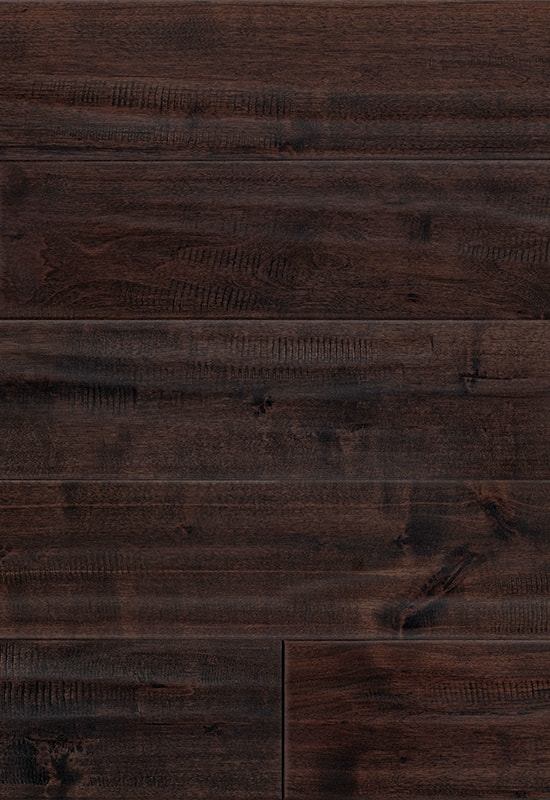
A useful sales approach is to explain trade-offs directly. A smoother, darker floor can look elegant on day one, but it often shows dust and scratches more easily. A mid-tone floor with more natural variation usually hides daily wear better and keeps customers happier over time.
Use grade, color, and finish to fit the renovation style
Customers do not only buy wood flooring for function. They buy it for how it changes the feel of the home. That is why grade, surface texture, and finish level should be recommended as part of the design solution, not as secondary details.
Practical visual recommendations
- Use cleaner grades for contemporary renovations where uniformity is preferred.
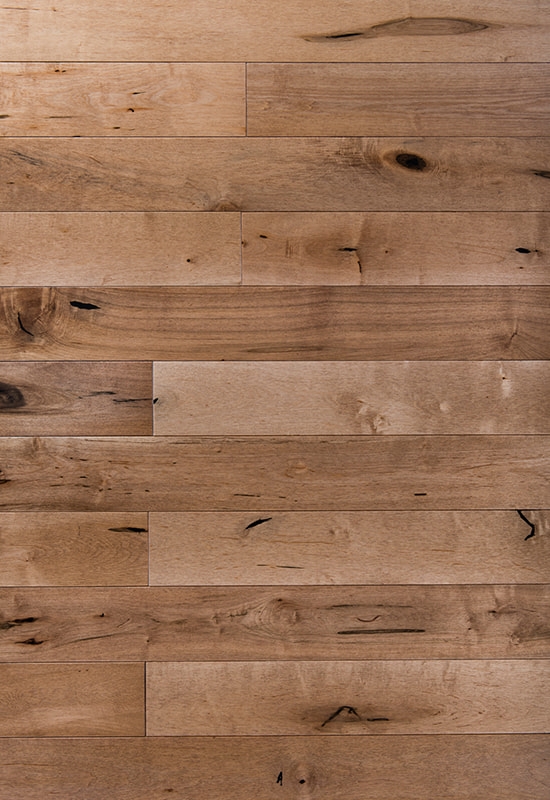
- Use character grades for farmhouse, rustic, or lived-in interiors where knots and variation add value.
- Use matte or low-sheen finishes when the customer wants easier visual maintenance.
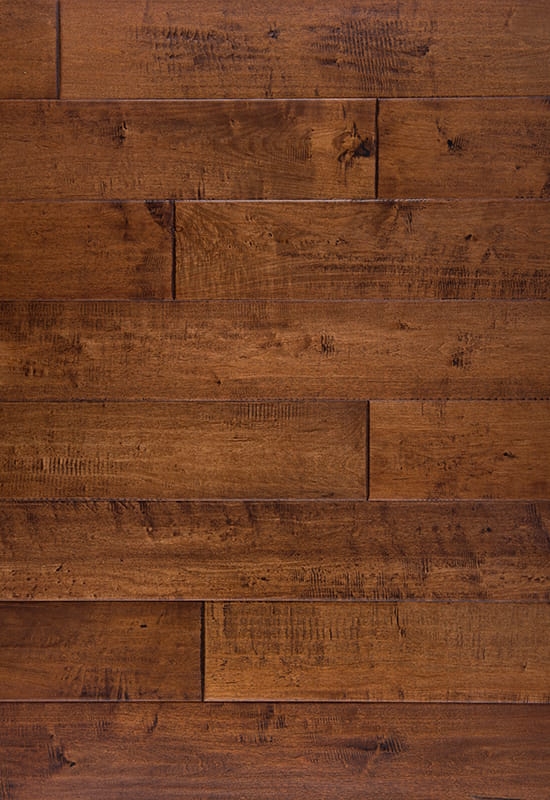
- Use textured or brushed surfaces to reduce the visibility of minor scratches and dust.
Low-gloss finishes are often the safest recommendation for real households because they usually hide daily wear better than high-gloss finishes. This is especially important in renovations where customers expect the floor to look good without constant upkeep.
Guide customers with a realistic budget conversation
A strong recommendation should protect the customer from underbuying and overbuying. The total cost of a wood floor renovation includes more than the plank price. Underlayment, moisture control, transition pieces, trim work, subfloor preparation, and labor can significantly change the final number.
What should be discussed in the budget
- Material price per square foot
- Installation method and labor complexity
- Subfloor leveling or repair needs
- Waste factor for cuts, pattern matching, and future repairs
- Long-term maintenance and refinishing expectations
For example, a lower-cost floor may become a poor value if it requires more site preparation or has a finish that shows wear quickly. A slightly higher material cost can be the smarter recommendation when it reduces labor issues, extends service life, or lowers maintenance complaints.
Recommend installation methods that suit renovation constraints
Installation is where many renovation flooring recommendations succeed or fail. Even an attractive wood floor can become a problem if the method does not suit the space. Nail-down, glue-down, and floating systems all have different strengths depending on the site.
| Installation Method | Where It Fits Best | Key Benefit |
|---|---|---|
| Nail-down | Wood subfloors and traditional layouts | Solid feel and long-term familiarity |
| Glue-down | Concrete subfloors and engineered products | Strong stability and reduced movement |
| Floating | Fast renovations with height and time limits | Faster installation and easier replacement |
This is also where timeline matters. In occupied homes, a faster and cleaner installation path may be more valuable than a technically premium option that disrupts the household for longer.
Reduce complaints by setting maintenance expectations early
One of the most effective ways to recommend the right wood floor is to explain how it will age. Customers are usually more satisfied when they know what normal wear looks like. This is especially important with natural materials, where variation and seasonal movement are part of the product rather than signs of failure.
Points worth explaining clearly
- Sunlight can gradually change wood color.
- Dry and humid seasons can cause slight expansion and contraction.
- Darker, smoother floors usually reveal dust and scratches more quickly.
- Entrance mats, felt pads, and regular cleaning significantly improve floor appearance over time.
This kind of guidance makes recommendations feel honest rather than promotional. It also helps the customer choose a floor they can actually live with, not just admire in a sample board.
A simple framework for recommending the right wood floor to customers
A repeatable recommendation framework helps sales teams, designers, and contractors stay consistent. It also makes the recommendation easier for customers to understand and accept.
- Assess site conditions, including subfloor type, moisture exposure, and height limitations.
- Confirm household demands such as pets, children, traffic level, and maintenance habits.
- Match floor construction to project risk, choosing solid or engineered wood based on performance needs.
- Select species, grade, plank width, and finish according to wear tolerance and design goals.
- Present full installed cost, not just product cost.
- Explain maintenance and aging honestly before the sale is finalized.
The most convincing wood floor recommendation is specific, practical, and matched to the renovation environment. Customers respond better when the advice clearly solves their project constraints instead of simply presenting attractive options.
Conclusion
To recommend the right wood floor for renovation projects, focus on fit before finish. Start with moisture conditions, subfloor type, traffic level, and budget. Then narrow the choice by construction, species, grade, and finish. In many real renovation settings, engineered wood with a low-sheen finish is the safest all-around recommendation because it balances appearance, stability, and everyday practicality.
The strongest recommendation is not the one with the most premium look on a showroom sample. It is the one that performs well after installation, suits the customer’s daily life, and continues to look good long after the renovation is complete.

 +86-572-2118015
 No.598. Gaoxin Road, Huanzhu Industrial Zone, Huzhou City, Zhejiang Province, China, 313000