

 Eng
Eng  English
 中文简体
中文简体 Français
Content
- 1 The Designer’s Darling: Why White Oak Dominates Interiors
- 2 The Bourbon Barrel Factor: An Unexpected Competitor
- 3 The Supply Side: Why White Oak Trees Can’t Keep Up
- 4 Breaking Down the Cost: From Log to Floor
- 5 White Oak vs. Red Oak: Is the Premium Worth It?
- 6 How to Save on White Oak Flooring: 5 Practical Strategies
- 7 The Future of White Oak Prices: What to Expect in 2026-2028
The Designer’s Darling: Why White Oak Dominates Interiors
Walk through a newly completed high-end renovation and you'll likely step onto white oak floors. The material now appears in roughly 40% of all premium residential flooring projects in North America, a sharp rise from less than 15% a decade ago. Its subtle grain, high stability, and ability to take nearly any stain or finish have made it the default choice for architects chasing Scandinavian minimalism, modern farmhouse warmth, or even urban industrial looks.
White oak's visual range is remarkably wide. Natural clear-grade planks show off a tight, straight grain with a pale tan-to-cream backdrop. Wire-brushed or fumed treatments push the wood toward deep charcoal or rich caramel tones without ever looking artificial. This chameleon quality means one species can satisfy an entire design palette, cutting down on specification time for builders and designers alike.
The trend isn't confined to flooring. White oak beams, built-in cabinetry, ceiling cladding, and even kitchen islands have become signature elements. Every linear foot of that material competes for the same log supply, multiplying the pressure on a market already stretched thin. Demand grew faster than mills could adapt, and prices followed.
Manufacturers saw the shift coming and stocked heavily on plain-sawn white oak, but trend cycles shifted toward rift-and-quarter-sawn cuts. Those yield fewer boards per log and command a 15 to 25 percent premium, adding another layer to the final sticker price.
The Bourbon Barrel Factor: An Unexpected Competitor
U.S. law requires bourbon to be aged in new, charred white oak barrels. Once used, those barrels cannot be reused for bourbon, though many are sold to Scotch or rum producers. This single-use mandate drives a relentless appetite for white oak staves. American distilleries now fill over 2.5 million new barrels annually, consuming roughly 1.5 million mature white oak trees every year.
The bourbon industry has been growing at a compound annual rate near 5 percent, while craft distilling adds further fringe demand. Barrel cooperages bid aggressively for high-grade white oak logs, often outbidding flooring and furniture mills. A white oak log suitable for stave production can command 10 to 20 percent more at auction than an equivalent log destined for lumber, simply because cooperages require long, knot-free sections and will pay accordingly.
Wine and spirits producers outside the U.S. also prize white oak, especially French and American hybrids for premium wine barrels. That global competition funnels logs away from domestic flooring plants, tightening supply for everyone else.
The Supply Side: Why White Oak Trees Can’t Keep Up
A white oak tree takes 80 to 100 years to reach commercial maturity. Unlike faster-growing species such as red oak, which can be harvested in 50 to 60 years, white oak's slow growth limits the speed at which the forest can replenish itself. Selective cutting practices and conservation regulations further restrict annual harvest volumes, leaving little room to ramp up production quickly.
Insect pressure has added a new limitation. The invasive spongy moth and oak wilt fungus have stressed hardwood forests across the Midwest and Appalachia, reducing the quality and quantity of available timber. Reforestation efforts are underway, but trees planted today won't be ready for the market until the 2090s at the earliest.
On the export side, Chinese mills absorb a significant share of U.S. white oak logs. American exporters shipped over 30 million board feet of white oak to China last year alone, further thinning the domestic log supply. This global tug-of-war keeps stumpage prices high regardless of local building cycles.
Breaking Down the Cost: From Log to Floor
Retail buyers often see only the final price and wonder why white oak costs double what it did five years ago. The answer lies in a cost structure that piles up at every stage. Log procurement now accounts for roughly 40 to 45 percent of the finished board's cost, with drying and milling adding another 25 percent. Transportation, import duties, and distributor markups then stack on the remaining 30 percent.
Sawmills running white oak face an added yield penalty. Because logs arrive in varying diameters and often carry internal defects from mineral streaks or insect damage, recovery rates hover between 55 and 65 percent. That means nearly half of each log becomes lower-value byproducts like pallet stock or fuel chips, pushing the cost of each clear board even higher.
Factory-direct supply chains can strip out one or two layers of markup. A manufacturer that air-dries its own lumber, mills in-house, and sells straight to flooring contractors or retailers can keep pricing 15 to 20 percent below the traditional wholesale distribution model. That margin difference becomes decisive on large commercial jobs or whole-home installations.
| Cost Component | Traditional Distribution | Factory-Direct (Engineered) |
|---|---|---|
| Log acquisition & grading | 42% | 48% |
| Drying & milling | 25% | 30% |
| Transport & import duties | 18% | 12% |
| Wholesaler & retailer margin | 15% | 10% |
Engineered white oak flooring changes the equation further. A wear layer of real white oak bonded to a stable birch plywood or HDF core uses 60 to 70 percent less premium hardwood per square foot than a solid board. That structure keeps the visual charm of white oak while trimming raw-material cost and enabling installation over concrete or radiant heat.
White Oak vs. Red Oak: Is the Premium Worth It?
Red oak still costs 30 to 50 percent less than white oak for a comparable grade, which makes it the go-to alternative when budgets tighten. The two species differ in more than price, however, and the choice should hinge on where and how the floor will live.
White oak's Janka hardness rating sits around 1360 lbf, slightly above red oak's 1290 lbf, indicating marginally better dent resistance. More practically, white oak's closed grain structure makes it naturally more resistant to moisture and rot. That property matters in kitchens, bathrooms, and below-grade installations where red oak's open pores can wick water and swell.
Stain absorption separates the two. Red oak's pronounced grain pattern takes color unevenly, creating a rustic, high-contrast look some homeowners love. White oak accepts stain with more uniformity, delivering the smooth, contemporary finish designers demand. For projects aiming at a calm, Scandinavian aesthetic, white oak's predictability justifies the extra cost.
| Attribute | White Oak | Red Oak |
|---|---|---|
| Janka hardness (lbf) | 1360 | 1290 |
| Grain structure | Closed, tight | Open, porous |
| Moisture resistance | High | Moderate |
| Average price per sq. ft. (2026) | $8 – $14 (solid) | $4.50 – $8 (solid) |
| Best for | Contemporary, wet areas | Rustic, dry interiors |
If the project's design language leans traditional or includes heavy area rugs year-round, red oak often satisfies every performance need at a friendlier price. But when the specification calls for wide planks, light natural finishes, or long-term durability against humidity swings, white oak remains the safer investment.
How to Save on White Oak Flooring: 5 Practical Strategies
Pricing pressure doesn't mean you have to abandon white oak entirely. A few strategic moves can bring the cost down 20 to 35 percent without crossing into substitute species.
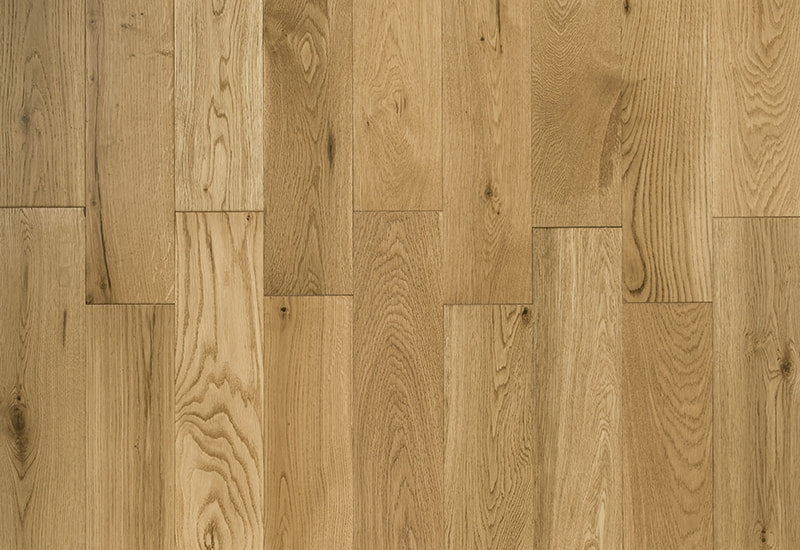
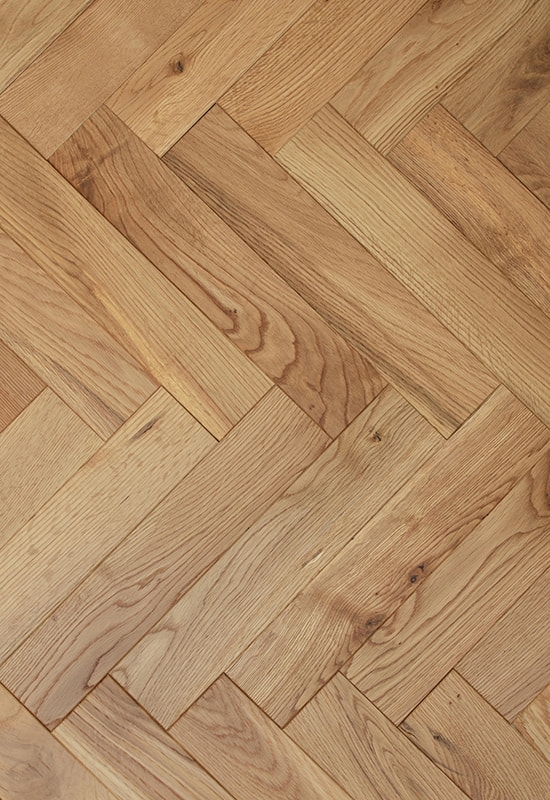
- Switch to engineered white oak. Engineered planks use less prime hardwood while delivering the same wear layer and visual appeal. Products such as natural white oak engineered flooring provide a full 3mm to 4mm wear layer that can be sanded two to three times over a 30-year life. The lower material consumption and easier installation often cut total project cost by 25 percent versus solid.
- Buy in project-sized bundles. Most mills offer tiered pricing that drops $1.50 to $2.00 per square foot when ordering 2,000 square feet or more. Combine rooms, work with a neighbor, or plan a whole-floor renovation to hit the higher bracket.
- Choose a standard finish grade. Select-grade boards command a premium for near-flawless appearance. A #1 Common grade, which allows small knots and mineral streaks, can reduce the raw lumber cost by 18 to 22 percent. Once installed and sealed, the character marks often look intentional in farmhouse and casual modern interiors.
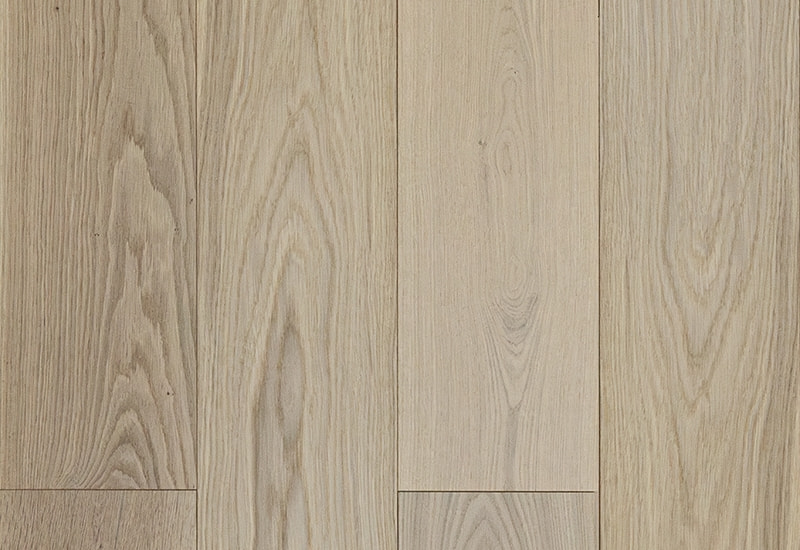
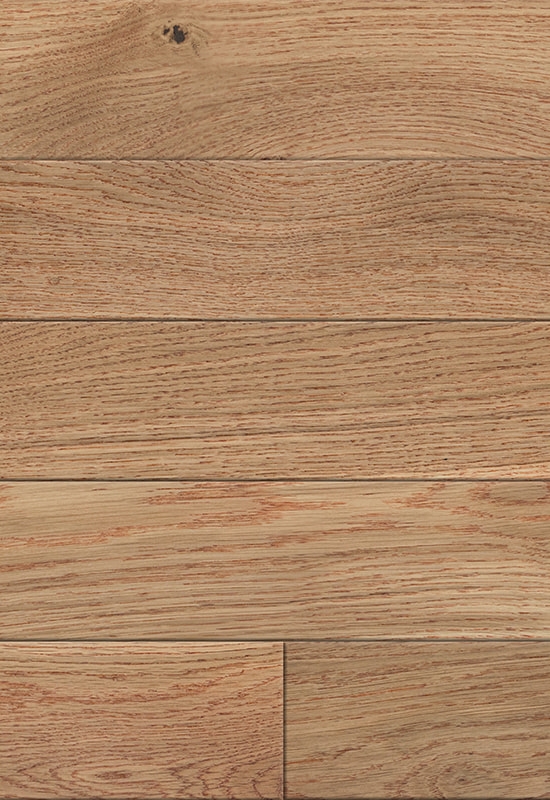
- Opt for simpler surface treatments. Hand-scraped or heavily distressed textures add $2 to $4 per square foot in labor. A wire-brushed or smooth finish, like the surface on Riesling white oak planks, achieves a refined look at standard pricing while still hiding light wear.
- Lock prices with a forward contract. If you're ordering for a project six to twelve months out, ask suppliers about price-lock agreements. Many mills are willing to guarantee current rates against a 30 percent deposit, shielding you from another 5 to 10 percent seasonal increase.
The Future of White Oak Prices: What to Expect in 2026-2028
Multiple data streams point toward continued upward pressure. U.S. Forest Service inventory models show standing white oak volume declining slightly through 2030 under current harvest rates. Meanwhile, bourbon cooperages plan to increase output by another 4 to 6 percent annually, and residential renovation activity shows no signs of cooling.
Futures markets for hardwood lumber peg white oak FAS (Firsts and Seconds) grade to climb approximately 12 to 18 percent over the next three years. Mill executives report log yards running at 60 percent of normal inventory levels, forcing them to pay premium stumpage just to keep saws running. That scarcity cascades into higher wholesale prices every quarter.
On the brighter side, engineered flooring capacity is expanding. Several large mills in China and Vietnam, operating with direct access to Shanghai and Ho Chi Minh City ports, have added dedicated white oak production lines. This expansion in manufacturing scale may partially offset log scarcity for mid-market buyers, keeping engineered white oak pricing more stable than solid lumber.
Anyone planning a major white oak purchase in 2026 should view waiting as a risk. A floor quoted at $9 per square foot today could easily reach $10.50 by late 2027. Locking in a specification now, especially with a factory-direct source, turns inflation into a manageable line item instead of a budget-busting surprise.

 +86-572-2118015
 No.598. Gaoxin Road, Huanzhu Industrial Zone, Huzhou City, Zhejiang Province, China, 313000