

 Eng
Eng  English
 中文简体
中文简体 Français
Content
- 1 1. Sourcing the Raw Material: From Forest to Sawmill
- 2 2. Cutting & Sorting: How Logs Become Planks
- 3 3. The Critical Step: Kiln Drying for Stability
- 4 4. Planing, Milling & Profiling: Achieving Precision Dimensions
- 5 5. Surface Finishing: From Brushed to Smoked – A Guide to Textures
- 6 6. Quality Control: What to Look for in a Manufacturer
- 7 7. Solid vs. Engineered: How the Manufacturing Process Differs
- 8 8. From Factory to Your Project: Understanding Lead Times & Custom Orders
1. Sourcing the Raw Material: From Forest to Sawmill
A single 100-year-old white oak can yield enough flooring for an entire living room—but only if the tree was harvested at the right time and handled correctly from the start. Wood flooring production begins long before a saw touches the log. Species selection, tree age, and the season of harvest directly determine grain character, color consistency, and long-term stability.
Mills typically source hardwoods like oak, hickory, maple, and walnut from managed forests in the Appalachian region, where slow growth produces tight, uniform grain. Most flooring-grade trees are between 40 and 80 years old. Harvesting occurs in winter, when sap flow is minimal. That reduces internal moisture variation and lowers the risk of fungal staining before kiln drying begins.
| Species | Janka Hardness (lbf) | Grain Pattern | Typical Use |
|---|---|---|---|
| White Oak | 1,360 | Straight, prominent rays | High-traffic residential, wide planks |
| Hickory | 1,820 | Bold, varied color streaks | Rustic or high-impact interiors |
| Hard Maple | 1,450 | Fine, uniform texture | Contemporary, light finishes |
| Walnut | 1,010 | Rich, swirling dark grain | Formal rooms, darker stains |
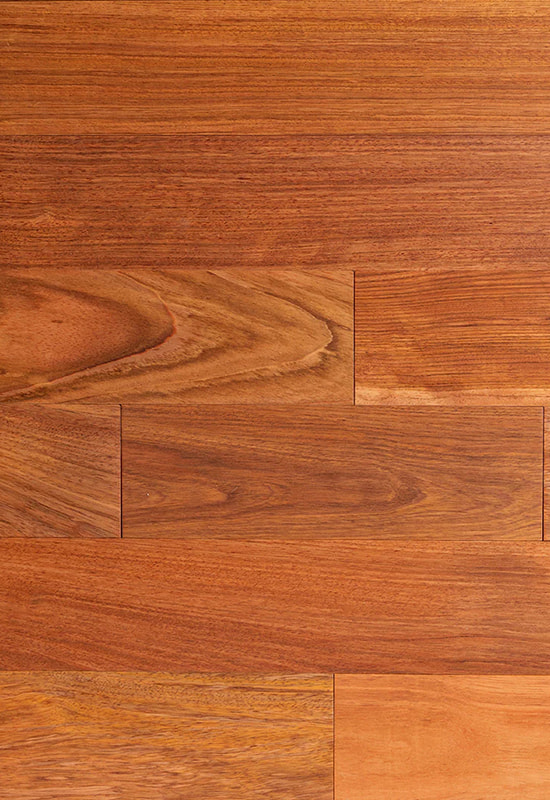
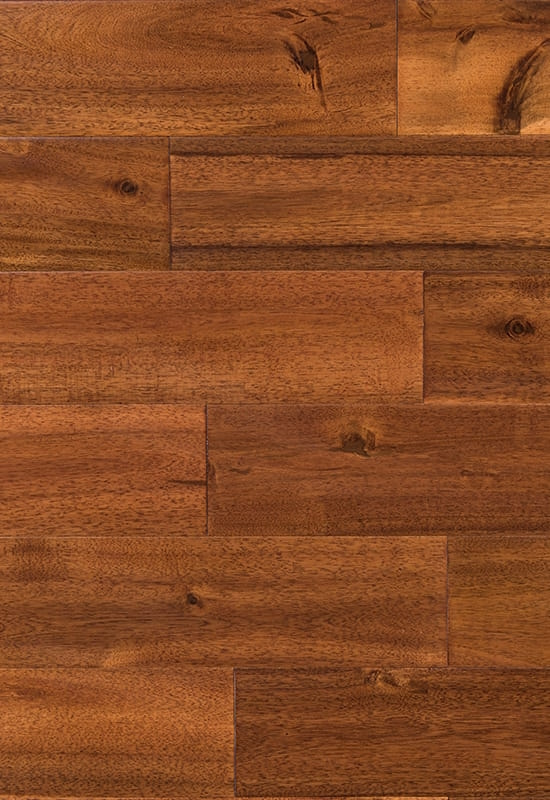
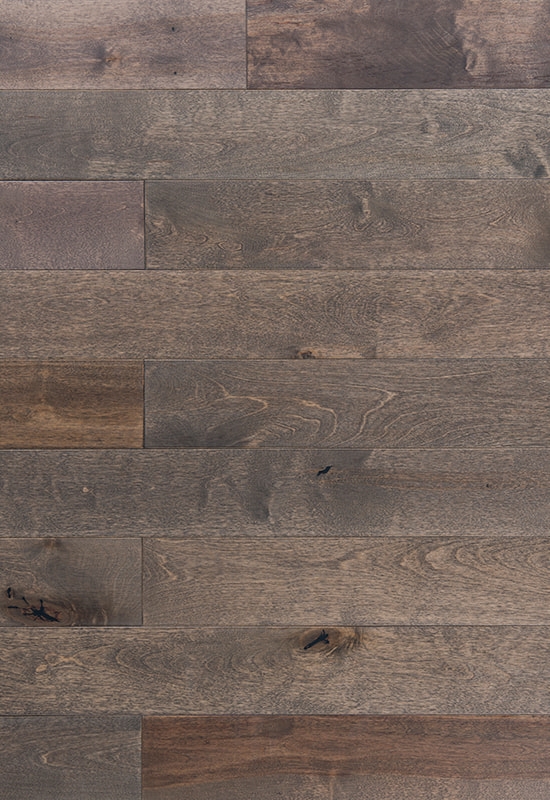
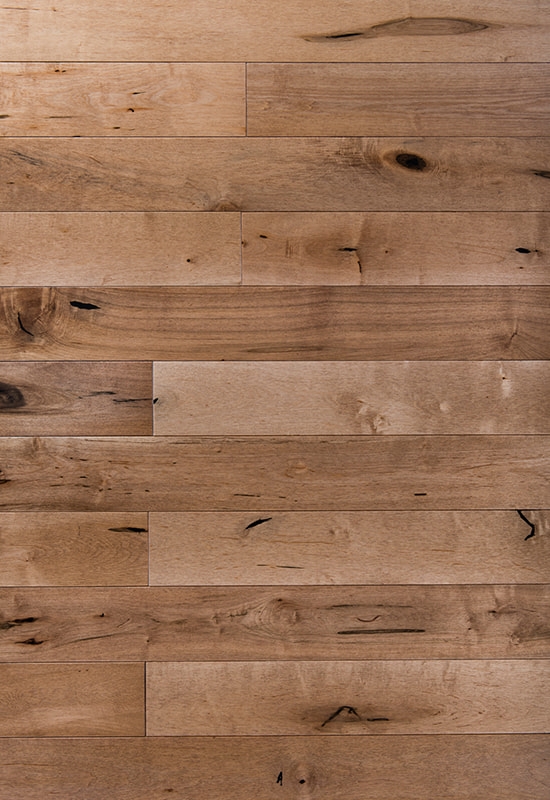
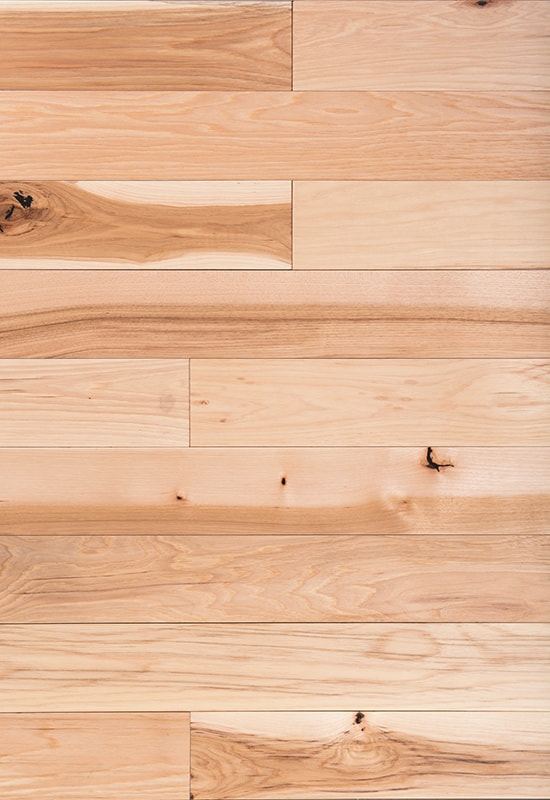
Each species brings a distinct hardness and visual signature, but the real test of quality comes in how the raw plank is cut and dried. Explore how these species translate into final products in our solid wood flooring selection.
2. Cutting & Sorting: How Logs Become Planks
The sawmill transforms round logs into rough planks, and the cutting method chosen here affects everything: dimensional stability, grain appearance, and even price. Three primary sawing techniques are used in wood flooring production, each with measurable trade-offs.
| Method | Stability | Yield (approx.) | Cost Impact | Grain Appearance |
|---|---|---|---|---|
| Plain Sawn | Moderate; prone to cupping | 80-95% | Lowest | Cathedral peaks, varied |
| Quarter Sawn | High; minimal expansion | 50-60% | Moderate | Straight rays, medullary flecks |
| Rift Sawn | Excellent; very stable | 30-40% | Highest | Tight, straight grain |
After sawing, planks are sorted by grade—Clear, Select, or Common under NWFA standards—based on natural characteristics like knots and color variation. Higher grades command a premium for uniform appearance, while lower grades offer a more rustic look at a lower cost. The sorting process also removes boards with structural defects before they reach the kiln.
3. The Critical Step: Kiln Drying for Stability
Freshly sawn wood can hold over 30% moisture. Without controlled drying, those planks would warp, split, or shrink after installation. Kiln drying brings moisture content down to 6-9%—the sweet spot for interior stability—and does it gradually enough to prevent internal stress.
Softwood species like pine may dry in 2-4 weeks. Dense hardwoods, however, require 4 to 8 weeks of carefully ramped temperatures. The schedule starts with low heat and high humidity to ease moisture out of cell walls, then raises temperature while lowering relative humidity. A final conditioning phase equalizes the moisture profile across each board, relieving residual tension that could otherwise cause end checking or honeycomb cracks.
Manufacturers monitor the process with in-kiln probes and sample weight checks. The target is not just the average moisture content but a tolerance typically held within ±2% across the batch. Skipping this precision risks boards that cup immediately after acclimation.
4. Planing, Milling & Profiling: Achieving Precision Dimensions
Once dried, planks pass through high-speed planers that shave surfaces to a uniform thickness. For solid flooring, the standard is 3/4 inch (19 mm), though thinner profiles like 5/16 inch appear in engineered constructions. Precision here is non-negotiable: a thickness variation of more than 0.2 mm across a batch will create lippage after installation.
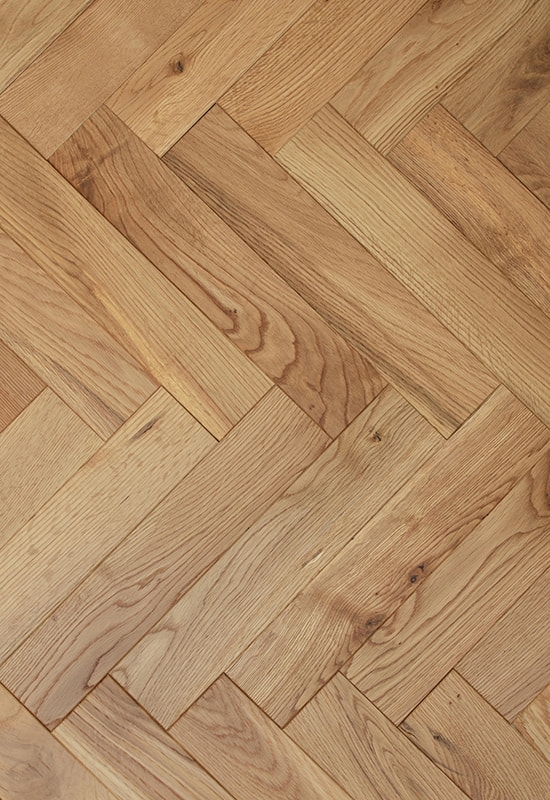
Next, milling heads cut the tongue-and-groove or click-lock profiles along the edges and ends. Tongue-and-groove systems rely on nail-down fastening, while click-lock joints allow floating installations and are more common in engineered products. Both profiles demand tight machining tolerances so that planks lock without gaps or excessive force. Milling also creates the end-matched joints that streamline diagonal or herringbone layouts.
5. Surface Finishing: From Brushed to Smoked – A Guide to Textures
The surface treatment defines both the look and the daily wear resistance of wood flooring. Production lines apply these finishes after milling, and the choice between a smooth UV-cured coat or a deep hand-scraped texture changes cost, maintenance, and feel underfoot.
| Technique | Visual Effect | Wear Resistance | Cost Level | Maintenance |
|---|---|---|---|---|
| Hand-Scraped | Authentic, undulating texture | Very high (hides scratches) | High | Low |
| Brushed | Accentuated grain, matt look | High | Medium | Low |
| Smoked | Deepened, uniform color | Comparable to standard | Medium-High | Standard |
| Carbonized | Dark, warm tone; enhanced hardness | High | Medium-High | Low |
| UV-Cured Lacquer/Oil | Natural wood look, invisible protection | Moderate-High | Low-Medium | May need re-oiling |
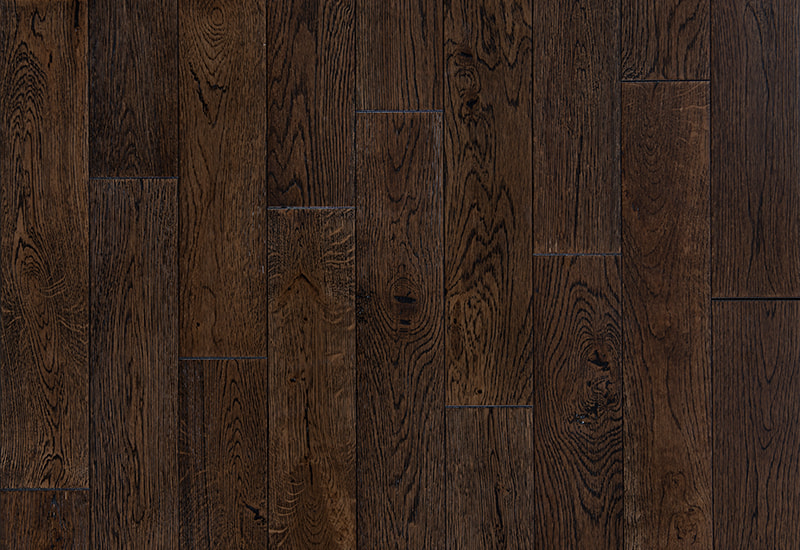
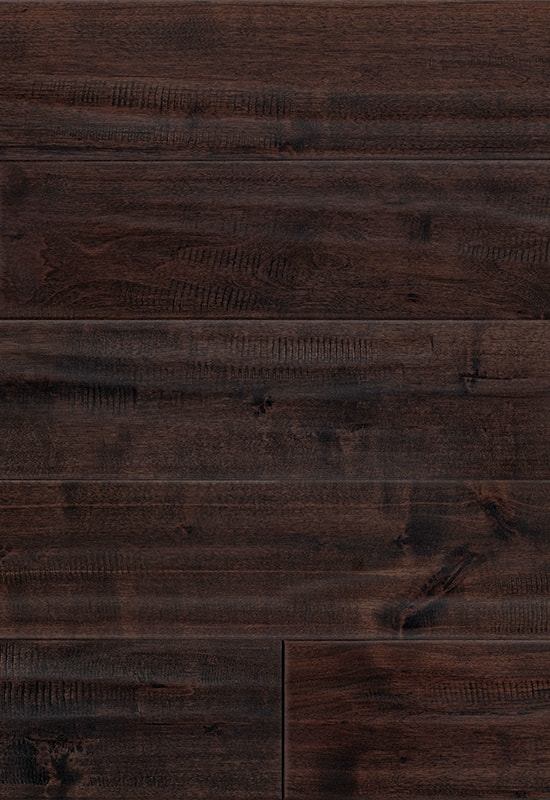
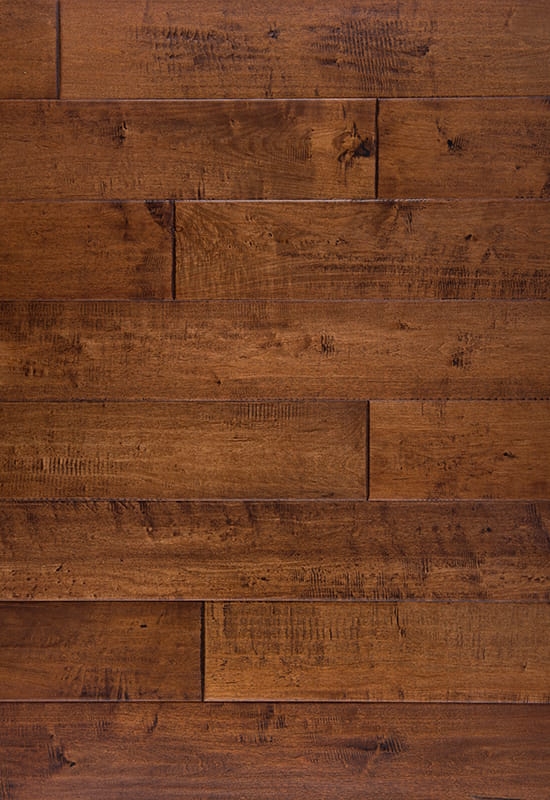
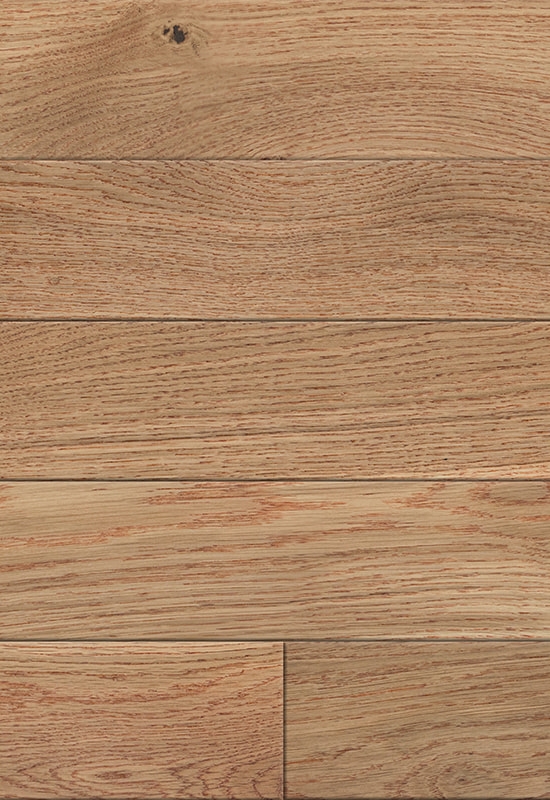
Brushed finishes use stiff wire rollers to remove softer springwood, leaving the grain raised. That texture disguises everyday scratches and suits busy households. Smoked and carbonized techniques alter the wood’s color through ammonia exposure or heat treatment, creating rich tones without stains. For instance, our white oak deep brushed flooring demonstrates how a pronounced grain pattern marries a matte surface with robust daily performance.
6. Quality Control: What to Look for in a Manufacturer
Behind every batch of finished flooring sits a set of measurable standards. Professional buyers evaluate formaldehyde emissions, surface wear ratings, and moisture content tolerances to separate premium mills from commodity producers.
| Parameter | Reference Standard | Acceptable Range |
|---|---|---|
| Formaldehyde Emission | EN 717-1 (E1/E0) | ≤ 0.1 ppm (E0), ≤ 0.5 ppm (E1) |
| Surface Wear Resistance | EN 13329 (AC rating) | AC3–AC5 for residential/commercial |
| Moisture Content Tolerance | NWFA / EN 14761 | ±2% from target (typically 6-9%) |
| Adhesion / Shear Strength | EN 204 (D3/D4) | ≥ 2.0 N/mm² (dry), ≥ 1.5 N/mm² (wet) |
Third-party lab testing of finishes and adhesives is a reliable indicator of a manufacturer’s commitment to safety and durability. Many high-end producers submit samples for regular audits beyond basic certification, ensuring every production run meets indoor air quality and structural integrity claims.
7. Solid vs. Engineered: How the Manufacturing Process Differs
Solid and engineered wood floors share many raw materials, but their production paths diverge significantly after the initial cutting stage. Understanding those differences clarifies performance under radiant heat, over concrete slabs, or in wide-plank formats.
| Aspect | Solid Wood Flooring | Engineered Wood Flooring |
|---|---|---|
| Core Construction | Single piece of timber | Multi-layer: hardwood veneer + plywood/HDF |
| Drying Requirements | 4-8 weeks kiln drying for thick planks | Veneer dries faster; core layers pre-conditioned |
| Thickness Profile | Typically 3/4 inch (19 mm) | 5/16 to 3/4 inch; thin wear layer |
| Stability | Moderate; reacts to humidity changes | Very stable; cross-lamination reduces movement |
| Compatible Subfloors | Plywood/OSB subfloor, nail-down | Concrete, radiant heat, float, glue, nail |
| Refinishing Potential | Multiple sandings (5-7 times) | 1-3 times depending on wear layer thickness |
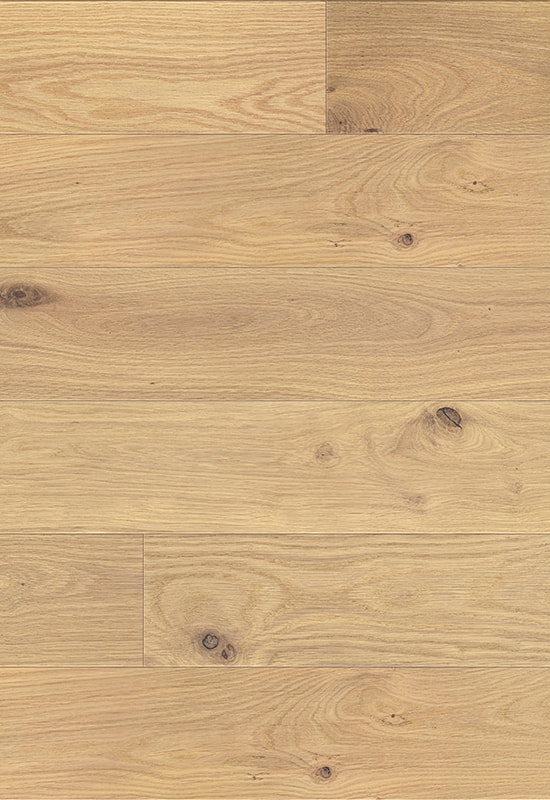
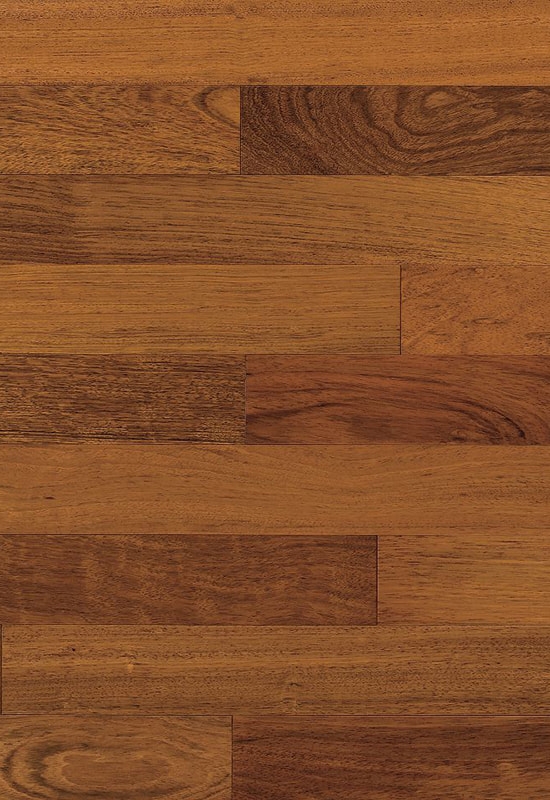
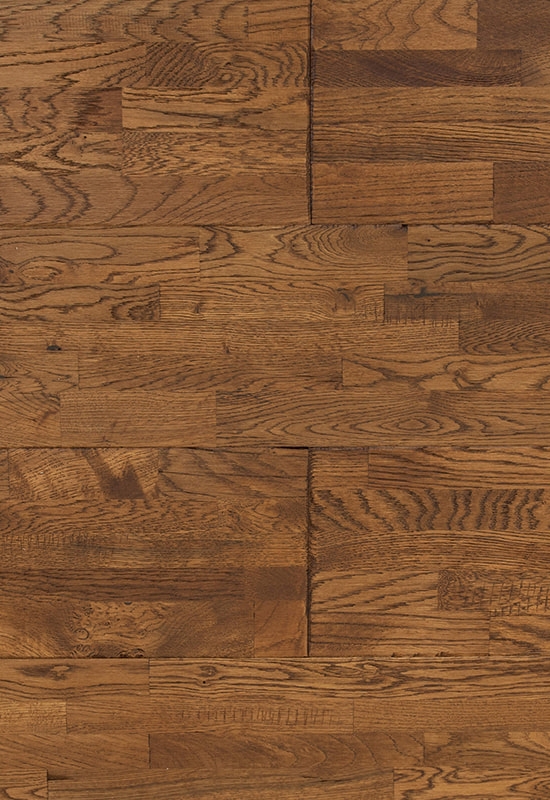
In engineered production, a thin sawn or sliced hardwood lamella is bonded to a structurally stable base—often high-density fiberboard (HDF) or birch plywood—under heat and pressure. This cross-grain assembly virtually eliminates seasonal gapping, making engineered planks the preferred choice for below-grade installations and underfloor heating systems. Browse our engineered wood flooring products for examples of how that construction opens up new design possibilities.
8. From Factory to Your Project: Understanding Lead Times & Custom Orders
Standard wood flooring production follows a predictable timeline. From log yard to packaged pallet, the sequence—sawing, kiln drying, planing, profiling, and finishing—typically spans 8 to 12 weeks. Dense hardwoods and complex surface treatments push toward the upper end. Custom orders add another variable: selecting a non-stock species, adjusting plank width, or specifying a unique stain and texture can extend lead time by 2-4 weeks as mill schedules are reconfigured.
Many producers maintain buffer stocks of popular oak and maple profiles in common finishes to shorten delivery for volume orders. However, projects requiring tight color matching across large areas may still need a dedicated production run. Clear communication with the mill about required quantities and tolerances early in the design phase prevents costly installation delays.

 +86-572-2118015
 No.598. Gaoxin Road, Huanzhu Industrial Zone, Huzhou City, Zhejiang Province, China, 313000