

 Eng
Eng  English
 中文简体
中文简体 Français
Content
You ordered a solid white oak floor, the delivery truck arrived this morning, and your installer wants to start tomorrow. If you agree, you are accepting a risk that may show up as gaps next winter, cupping next summer, or creaking within a year. The rule in our industry is simple: let the wood adjust before it is fastened down. Hardwood acclimation is not a polite suggestion or a delay tactic. It is the process of balancing the moisture content of wood to the environment in which it must perform, and that balance has to happen before installation, not after. This article explains why acclimation is non-negotiable, what conditions to aim for, and how to verify when your floor is ready.
What Happens When Wood Is Not Acclimated?
Wood is hygroscopic. It pulls moisture from humid air and releases moisture to dry air. A board that leaves a factory at a controlled moisture content can change noticeably during shipping and warehouse storage. If you install it before it reaches equilibrium with the room, it will keep changing after it is nailed or glued down. That change is visible in several common failure patterns:
- Gapping: When boards release moisture and shrink, you get open seams between planks. In a dry winter, gapping is especially common.
- Cupping: The edges of a board curl upward because the bottom of the board is wetter than the top. This can happen when the subfloor is damp or when the room air is very dry.
- Crowning: The center of a board rises above the edges. Crowning is often a result of sanding a cupped floor too soon, but it can also appear on its own in humid conditions.
- Buckling: Severe expansion pushes boards upward off the subfloor. Buckling can be dangerous and usually means removal of the affected area.
The financial impact is real. A cupped floor in a kitchen can require sanding within the first year, and sanding solid wood is not always guaranteed to remove the shape. Engineered floors may be too thin to sand at all. The cheapest fix is to prevent moisture surprises before installation. If you want to understand the details of cupping and when a professional can help, our guide to wood floor cupping covers causes and repair options.
Acclimation Targets: Moisture Content, Temperature, and Humidity
Wood constantly moves toward the equilibrium moisture content (EMC) of the air around it. EMC shifts with temperature and relative humidity, so the same plank that works in one city can be problematic in another. The practical target is to bring the wood's moisture content close to the moisture content of the subfloor and the expected room conditions.
For most North American and European installations, a good starting range is 60 to 80 degrees F (15 to 26 degrees C) and relative humidity around 30 to 50 percent. The wood moisture content should be within about 2 percentage points of the subfloor moisture content, and many manufacturers want an even tighter tolerance for wide planks. Because the right number varies, the best tool is a moisture meter, not a calendar.
| Floor type | Typical acclimation period | Key considerations |
|---|---|---|
| Solid hardwood | 5 to 7 days or longer | Moves the most with humidity; needs full room conditioning and careful moisture checks. |
| Engineered hardwood | 3 to 5 days | Cross-ply construction is more stable, but the wood top layer still needs to balance. |
| HDF engineered hardwood | 2 to 3 days | High-density core absorbs less moisture, but the veneer and finish still respond to the environment. |
Do not treat the table as a mechanical rule. A solid floor in a coastal climate may need 10 days; an engineered floor in a controlled new build may be ready in 48 hours. The more extreme the difference between the shipping environment and the final room, the more time you should budget. If you are not sure, ask the floor manufacturer for their specific acclimation recommendation based on your region and season.
How to Acclimate Hardwood Flooring in Practice
Acclimation requires a little planning, but the steps are straightforward.
- Set the room climate first. At least 7 to 14 days before delivery, run the heating or cooling system in the job site to normal living conditions: 60 to 80 degrees F and 30 to 50 percent relative humidity.
- Check the subfloor. Wood subfloors should measure below 12 percent moisture content, while concrete slabs need a moisture test before any wood floor is installed. Record the readings.
- Place the unopened boxes flat in the installation room. Keep them away from exterior walls, HVAC vents, radiators, and direct sunlight. If possible, stack them with small spacers so air can move around the boxes.
- After the first 48 to 72 hours, open one end of each box or break open a few bundles unless the manufacturer instructs otherwise. This speeds up moisture exchange between the wood and the room.
- Measure the wood moisture content and the room relative humidity every day. Stop the acclimation only when the wood reading stays within plus/minus 0.5 percentage points for three consecutive days.
- Sort and inspect every plank before installation. Discard boards with cracks, broken tongues, or other defects. Natural color variation is expected and is not a defect.
Seasonal conditions matter. In winter, heated indoor air is dry, so wood loses moisture and shrinks. In summer, humid air makes wood expand. If the floor is delivered during a humid month but installed after the dehumidifier goes into the basement, the wood needs time to match the drier conditions it will live with. For the same reason, do not close all the windows and leave the space sealed for days; the room needs steady, conditioned air, not a stagnant environment.
If you are working with an existing home, ask the owner how the heating and cooling will be used in the space. A room that is briefly heated on weekends will behave differently from a room kept at a constant temperature, and the wood will try to follow that pattern.
Solid vs. Engineered: Do Both Need Acclimation?
Yes. Solid and engineered hardwood both need acclimation, but the engineering changes how fast they respond. Solid boards are one piece of wood, so the entire board expands and contracts across its width. A 5-inch solid plank can move significantly from summer to winter. That is why solid floors are more sensitive to humid basements, sunrooms, and seasonal temperature swings.
Engineered hardwood is built with a top wear layer over a cross-ply core. The alternating grain directions of the core reduce movement and make the board dimensionally stable. As a result, engineered flooring usually acclimates faster and works better over concrete slabs, underfloor heating systems, and wide-span rooms. It is real wood on the surface, so it still needs time and a stable environment, but it tolerates more humidity variation after installation.
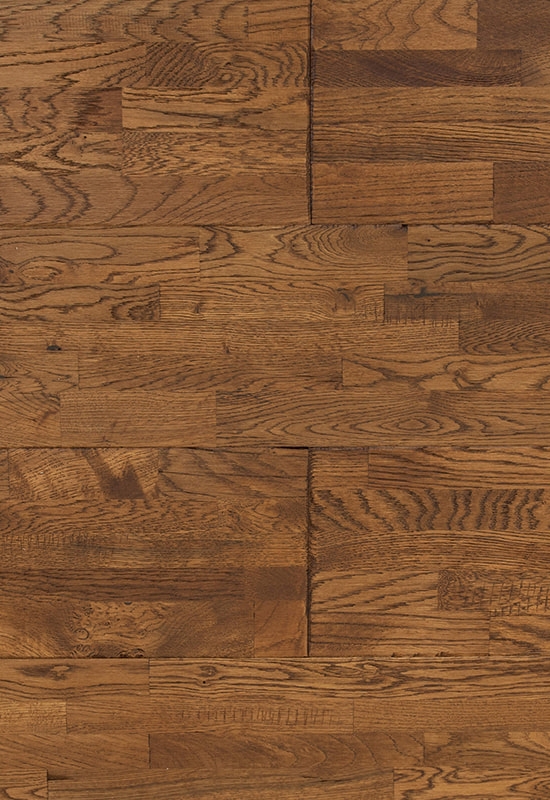
If you want a traditional solid aesthetic and are willing to manage the room climate carefully, a product such as this brushed solid white oak floor is a strong candidate. It needs full acclimation and a stable subfloor, but the uncompromising wood grain is hard to beat.
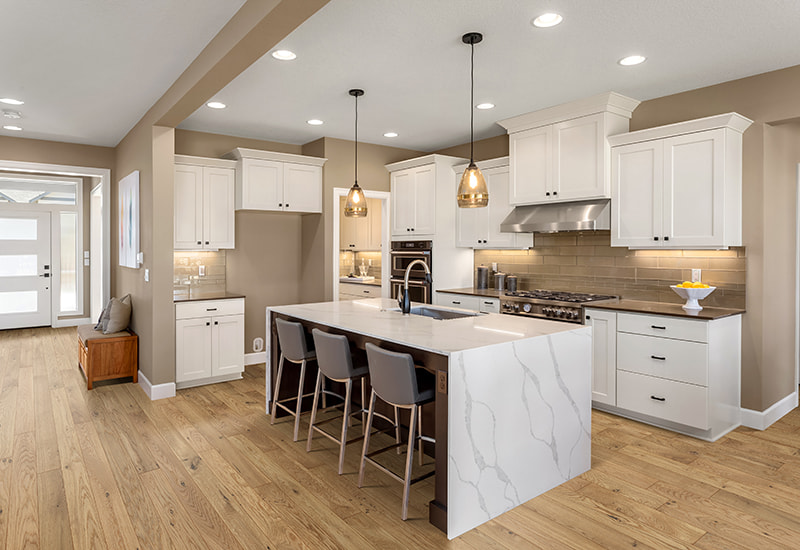 White Oak 90 Brushed Solid Wood Flooring Suppliers, FactoryJesonwood Forest Products(ZJ) Co., Ltd. is China Custom White Oak 90 Brushed Solid Wood Flooring Suppliers and White Oak 90 Brushed Solid...View Product →
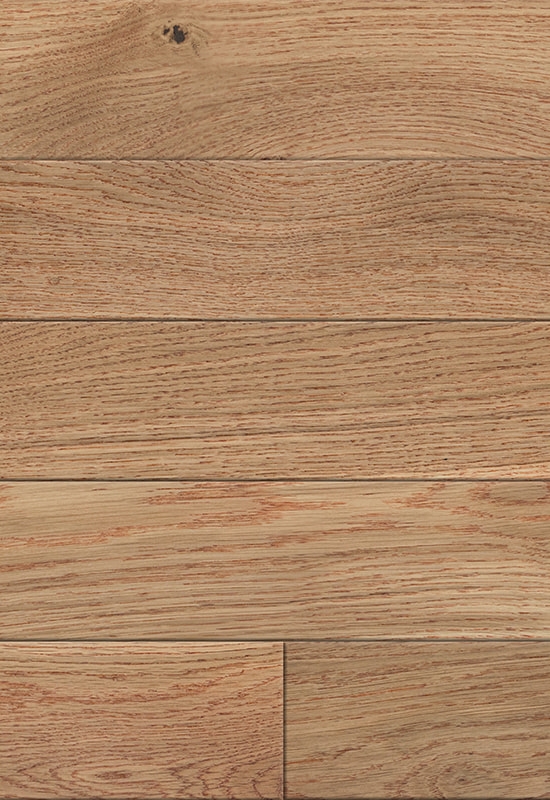
For a more predictable build, this natural white oak engineered plank offers the same look with less seasonal movement. It still sits in the room for a few days before installation, but the cross-ply core gives you more freedom with indoor humidity levels.
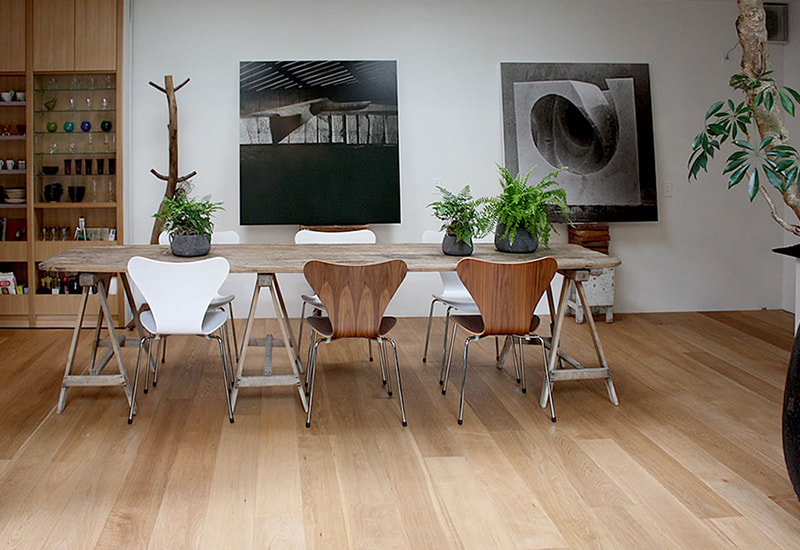 Natural White Oak OA001-9 Suppliers, FactoryJesonwood Forest Products(ZJ) Co., Ltd. is China Custom Natural White Oak OA001-9 Suppliers and Natural White Oak OA001-9 Factory in China,View Product →
HDF engineered boards take stability a step further. The high-density fiber core has very low moisture absorption, which is useful in kitchens, entryways, or mild commercial settings. Again, check the manufacturer's label; every product has its own recommended acclimation period.
Factory Moisture Control and Prefinished Flooring
As a manufacturer, we condition our solid, engineered, and HDF engineered boards to a target moisture range before packaging. Our production quality checks include regular moisture readings and climate monitoring in the factory. This helps your project start with a consistent product, but it does not eliminate the need for jobsite acclimation. Boards cross oceans and highways in sealed containers, where temperatures can swing from below freezing to above 90 degrees F. That journey changes the moisture balance of even the best-packaged wood.
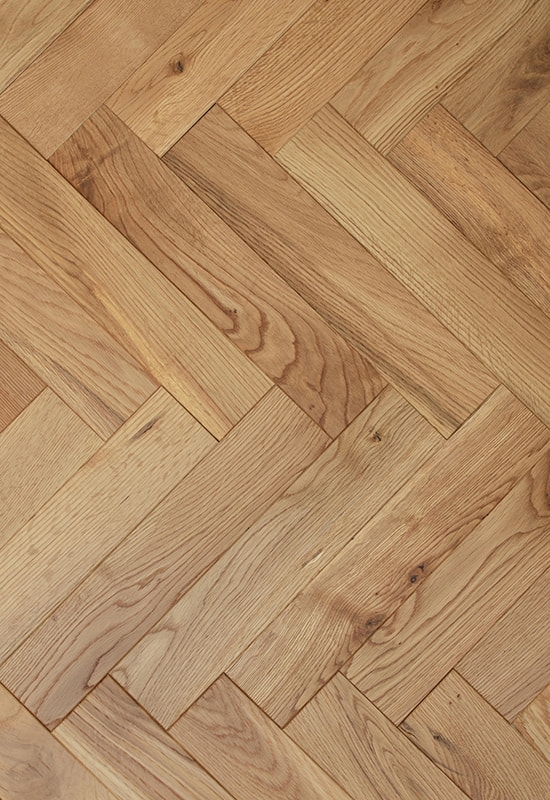
For example, this natural white oak herringbone pattern uses individually machined pieces that are prefinished and inspected before shipping. The short, narrow pieces move less than long planks, but they still need to adapt to the room because the finished visual depends on tight joints and uniform gaps. If the wood is not acclimated, the herringbone joints can open up over time.
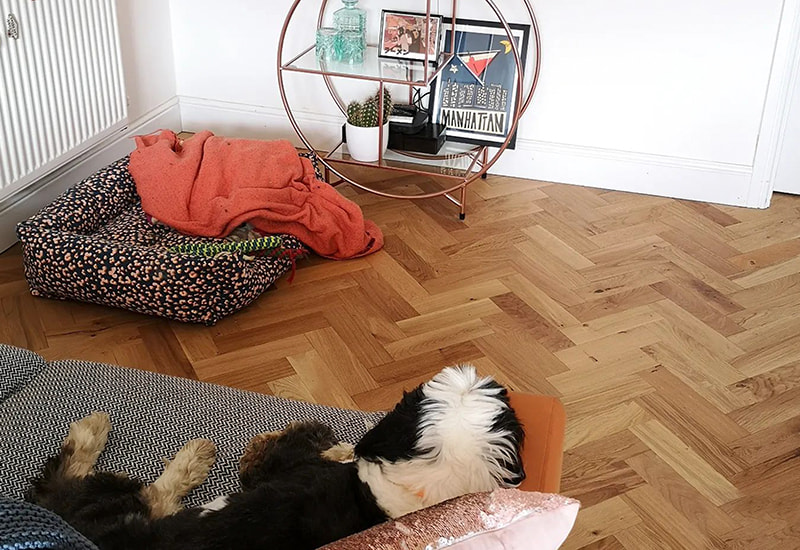 White Oak Natural Herringbone Engineered Wood Flooring OA001-7 Suppliers, FactorJesonwood Forest Products(ZJ) Co., Ltd. is China Custom White Oak Natural Herringbone Engineered Wood Flooring OA001-7 Suppliers and Whit...View Product →
So the rule is the same for prefinished and unfinished hardwoods: let the material adapt to the final environment, measure moisture content, and keep the site climate stable while the floor is being installed. That short waiting period is cheap insurance compared with a repair process that costs far more in time, labor, and materials.
The most important sentence in any wood floor specification may be this: do not install until the wood and the room agree on moisture. Write it into your project plan, ask your contractor to log temperature, relative humidity, and moisture content readings, and require stable readings before the first row goes down. A floor that has been properly acclimated looks better on day one and performs better for decades.

 +86-572-2118015
 No.598. Gaoxin Road, Huanzhu Industrial Zone, Huzhou City, Zhejiang Province, China, 313000