

 Eng
Eng  English
 中文简体
中文简体 Français
Content
- 1 Why Flooring Pattern Choice Affects Your Sales
- 2 Plank Flooring: The Bestseller Across Most Markets
- 3 Herringbone Flooring: Consistent Premium Demand in Europe and Beyond
- 4 Chevron Flooring: Niche Appeal with High Margin Potential
- 5 How Market Type Shapes Pattern Demand
- 6 Regional Market Breakdown: Europe, North America, and Asia
- 7 How to Build a Pattern Mix That Sells
Why Flooring Pattern Choice Affects Your Sales
When you are stocking or distributing wood flooring, choosing the right pattern is not just an aesthetic decision — it is a commercial one. Herringbone, Chevron, and Plank each carry a different price point, installation complexity, and buyer profile. Misreading your market means slow inventory, margin pressure, and missed opportunities.
The short answer: Plank sells the most units globally, Herringbone commands the strongest premium demand in European and design-led markets, and Chevron occupies a high-margin niche that rewards distributors who target the right end-user. But the full picture depends heavily on which market you serve, what channel you sell through, and whether the project is residential or commercial.
This article breaks down the demand dynamics for each pattern, compares regional performance, and gives you a practical framework for building a pattern mix that moves.
Plank Flooring: The Bestseller Across Most Markets
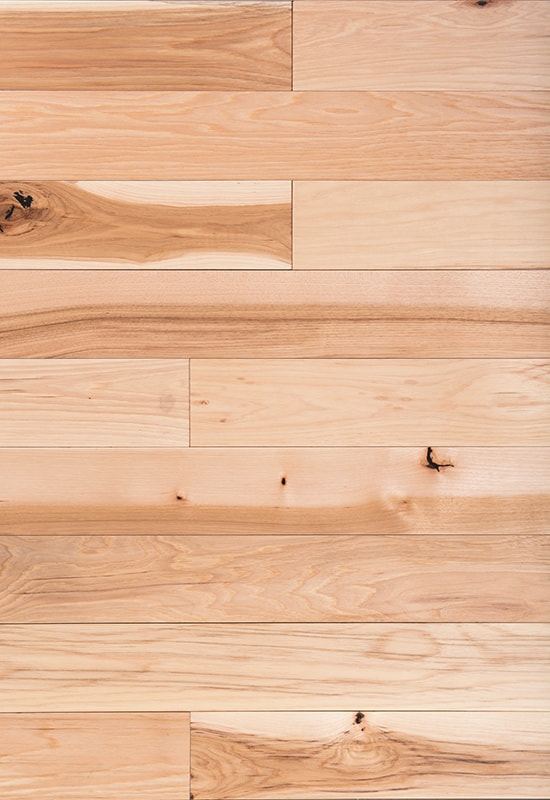
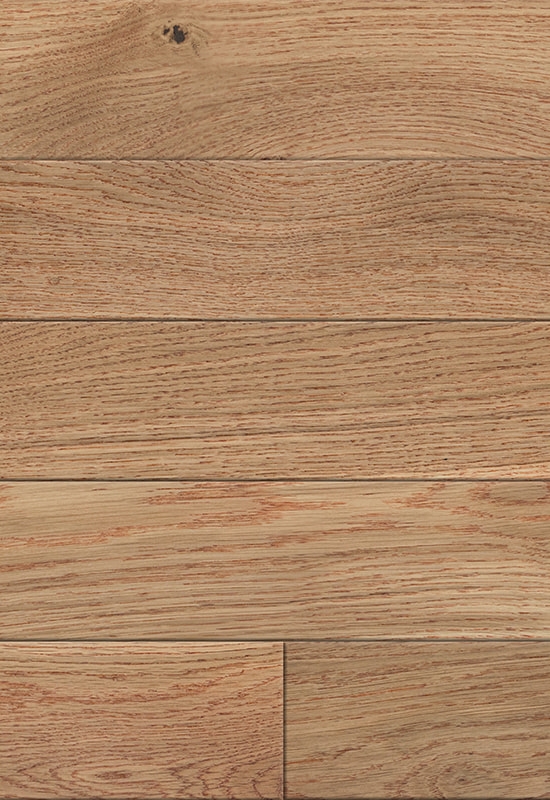
Plank is the dominant format in global wood flooring sales, and the numbers reflect it. Among engineered wood flooring collection offerings, plank SKUs typically account for the largest share of a manufacturer's catalog — often representing 70% or more of available options — because demand across all market segments supports that breadth.
The reasons are straightforward:
- Lower installation cost. Plank is laid in straight rows, requiring no specialized labor. Installers in every market are familiar with it, which keeps project costs down and widens the addressable buyer pool.
- Format flexibility. Wide-plank formats (180mm–220mm+) have seen strong growth across Europe and North America as homeowners seek a more open, Scandinavian feel. Narrow planks remain popular in markets with older housing stock where tighter proportions are more appropriate.
- Broad buyer appeal. Developers, contractors, and retail consumers all default to plank when budget or timeline is a constraint. It is the safe choice that rarely results in a lost sale.
For distributors, plank engineered flooring is your volume driver. It should anchor your catalog and form the core of any container order. The risk is commoditization — too many plank options at similar price points erode differentiation. Curating a focused range of species, widths, and finishes matters more than sheer SKU count.
Herringbone Flooring: Consistent Premium Demand in Europe and Beyond
Herringbone has moved well beyond a trend. In European markets — particularly the UK, France, the Netherlands, and Germany — it has become a standard specification for mid-to-upper residential projects, boutique hotels, and premium retail interiors. Demand has been steady for several years, and there is no sign of it fading.
What makes herringbone commercially attractive for distributors:
- Higher per-square-meter price. Buyers accept a premium for the pattern's visual complexity and installation requirements. Margins are typically 15–25% higher than equivalent plank products.
- Specification-driven demand. Architects and interior designers specify herringbone by name. When a project specifies it, there is no substitution with plank. This makes herringbone a more defensible sale.
- Repeat projects. Developers who use herringbone in one property tend to repeat it across subsequent builds, creating predictable reorder patterns.
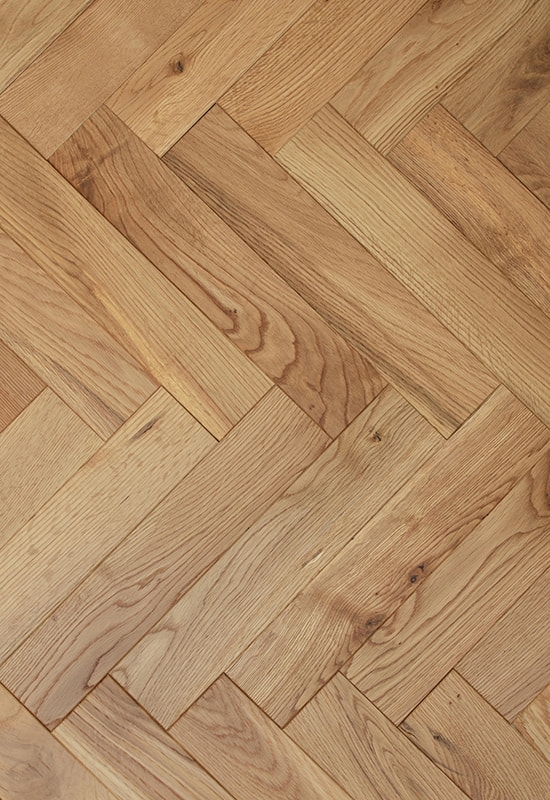
The pattern itself — rectangular planks placed at 90-degree angles to create a staggered zigzag — has roots in classical European architecture, which contributes to its enduring relevance in markets with strong design heritage. Herringbone engineered wood flooring in White Oak is particularly well-received across European markets, with smoked, carbonized, and natural finishes all moving reliably. Black Walnut herringbone commands the highest price point and suits high-end residential and hospitality applications.
In North American and Japanese markets, herringbone is gaining traction but remains a smaller share of total sales compared to Europe. For distributors in these regions, it is best positioned as an upsell option for design-conscious buyers rather than a primary volume product.
Chevron Flooring: Niche Appeal with High Margin Potential
Chevron wood flooring is the most visually striking of the three patterns. Where herringbone creates a broken zigzag with offset plank ends, chevron uses planks cut at a consistent angle — typically 45 or 60 degrees — so that the joints meet at a perfect point, forming a continuous V-shape. The result is a sharper, more graphic aesthetic that feels both bold and refined.
Chevron moves in smaller volumes than either plank or herringbone, but it carries the highest margins of the three formats. It is a pattern that self-selects for confident buyers with clear design intent — architects working on flagship retail environments, luxury residential developers, and hospitality groups that want a signature floor.
| Pattern | Volume Potential | Typical Margin vs. Plank | Primary Buyer Profile |
|---|---|---|---|
| Plank | High | Baseline | Developers, Contractors, Retail |
| Herringbone | Medium | +15–25% | Designers, Premium Residential, Hospitality |
| Chevron | Low–Medium | +25–40% | Architects, Luxury Projects, Flagship Retail |
The practical constraint with chevron is that it requires more precise manufacturing — the angle cuts must be consistent across every board for the pattern to align correctly on site. This means sourcing quality matters more with chevron than with plank. A floor that looks perfect in a showroom sample can disappoint on a large installation if tolerances are inconsistent.
For most distributors, chevron should represent a curated, limited part of the catalog — three to five well-chosen SKUs in proven species and finishes — rather than a broad range. It earns its place through margin contribution, not unit volume.
How Market Type Shapes Pattern Demand
The channel and end-use context of your market determines which pattern should anchor your range. There is no universal answer, but the following breakdown reflects consistent patterns across major distribution markets.
Residential New Build
Plank dominates. Developers at scale choose plank for cost efficiency and installation speed. Herringbone appears as a premium option in higher-specification units or show homes. Chevron is rare unless the developer is targeting a luxury segment.
Residential Renovation
This is where herringbone performs best relative to plank. Homeowners renovating an existing property are more likely to invest in a pattern floor, particularly in living rooms, hallways, and dining areas. The renovation buyer has more design awareness and a higher willingness to pay for something distinctive.
Commercial and Hospitality
Pattern floors — both herringbone and chevron — punch above their weight in commercial and hospitality projects. Hotels, restaurants, and retail flagships use patterned flooring as a brand signal. The floor is part of the customer experience, and the budget reflects that. For distributors with access to this channel, stocking a solid herringbone and chevron range pays back quickly.
Trade and Contract Supply
Trade buyers — flooring contractors and fit-out companies — typically drive volume with plank, but increasingly stock herringbone to meet designer specifications on premium contracts. The ability to supply herringbone at reliable lead times is a differentiator when competing for high-value accounts.
Regional Market Breakdown: Europe, North America, and Asia
Regional context is essential when making stocking decisions. The same product mix that works in the UK will not necessarily translate to the US or Japanese market without adjustment.
Europe — Pattern Floors Are Mainstream
Europe is the most developed market for herringbone and chevron. The UK, France, Belgium, and the Netherlands have strong consumer and trade demand for both patterns, particularly in White Oak with natural, smoked, or whitewashed finishes. Wide-format herringbone (typically 120mm×600mm or 130mm×650mm) is the most commonly specified size. European buyers are experienced, quality-conscious, and will reject product if surface consistency or joint precision falls below standard.
Recommended mix for European distributors: 50% plank, 35% herringbone, 15% chevron.
North America — Plank-Heavy with Growing Pattern Interest
The North American market is plank-dominant, with wide-plank White Oak and Maple formats particularly strong in both the US and Canada. Herringbone has been growing steadily, driven by interior design media and the renovation market in major metro areas. Chevron remains a small niche, largely confined to luxury new builds and boutique commercial projects. American buyers tend to favor wider, longer planks — formats that translate well to herringbone when positioned as a premium upgrade.
Recommended mix for North American distributors: 65% plank, 25% herringbone, 10% chevron.
Japan and East Asia — Quality Over Pattern
Japanese buyers prioritize material quality, surface finish, and dimensional precision above pattern complexity. Plank in narrow-to-medium widths with fine, consistent grain is the most reliable seller. Herringbone is present in the market but confined to high-end residential and design-forward commercial projects. Chevron is rare. For this market, the quality of the product you supply matters more than pattern breadth — a tight range of exceptional plank and a few herringbone SKUs will outperform a wide catalog of inconsistent product.
Recommended mix for Japanese/East Asian distributors: 70% plank, 25% herringbone, 5% chevron.
How to Build a Pattern Mix That Sells
The practical takeaway from comparing these patterns is that none of them operates independently. A well-structured catalog uses plank as the volume foundation, herringbone as the margin driver, and chevron as the high-end signal that elevates your brand positioning.
When building or reviewing your range, consider the following:
- Align species across patterns. If White Oak is your core plank species, carry it in herringbone and chevron too. This simplifies sourcing, reduces MOQ fragmentation, and allows customers to mix patterns within a project using a consistent species and finish.
- Standardize on proven sizes. For herringbone, the 120×600mm and 130×650mm formats cover the majority of European demand. For chevron, 60° angle cuts are more universally accepted. Avoid proliferating non-standard sizes that create inventory risk without corresponding demand.
- Use pattern to move customers up the value ladder. A customer inquiring about plank is a potential herringbone buyer. Train your team to present pattern options with margin context — a 20% price increase on a herringbone recommendation is a meaningful commercial outcome on a medium-sized order.
- Leverage design parquet flooring for project differentiation. For customers asking about statement floors, parquet formats extend your range beyond the three core patterns and capture demand at the very top of the market.
- Source from a manufacturer who carries all three. Consolidating plank, herringbone, and chevron with a single factory supplier ensures finish and quality consistency across patterns, reduces lead time complexity, and simplifies logistics on mixed-pattern orders.
Pattern choice in wood flooring is ultimately a market fit question, not a design preference question. The distributors who grow in this category are those who read their specific market accurately, stock the right depth in each pattern, and position each format at the right price for their buyer profile. Plank will always sell — but the businesses that build lasting margin know when and how to lead with herringbone and chevron.

 +86-572-2118015
 No.598. Gaoxin Road, Huanzhu Industrial Zone, Huzhou City, Zhejiang Province, China, 313000