

 Eng
Eng  English
 中文简体
中文简体 Français
Content
Most flooring failures trace back to one thing: the wrong product in the wrong environment. A floor that looks perfect in the showroom starts gapping in winter, cupping near the bathroom, or creaking above the underfloor heating system. Multi-layer engineered wood flooring was engineered specifically to eliminate these problems — and understanding how it does that is the first step to choosing the right floor.
What Is Multi-Layer Engineered Wood Flooring?
Multi-layer engineered wood flooring is a structural flooring product built from more than three individual wood layers — typically between 6 and 12 — bonded together under high pressure using moisture-resistant adhesives. The layers alternate in grain direction, a technique called cross-ply lamination, which is the source of the product's exceptional dimensional stability.
At the top sits a real hardwood veneer — the wear layer — milled from premium species such as white oak, black walnut, or teak. Beneath it, the multi-layer plywood core does the structural work. A balancing back layer at the bottom equalizes internal tension, preventing the board from bowing.
This is distinct from both solid hardwood (a single homogeneous plank that moves freely with moisture) and the HDF-core engineered wood flooring format, where a high-density fiberboard core replaces the plywood. Each construction has its role — multi-layer plywood core is typically the choice where structural resilience and long-term stability are paramount. You can explore Jeson Wood's full engineered wood flooring collection to compare formats side by side.
The Science Behind the Stability
Wood is hygroscopic — it absorbs and releases moisture as humidity shifts, and when it does, it expands or contracts. In solid wood flooring, this movement is unrestricted: boards can gap in dry winters and buckle in humid summers. The multi-layer construction solves this at a structural level.
Each plywood sheet in the core is oriented perpendicular to the one above and below it. When moisture tries to push one layer in one direction, the adjacent layers — oriented 90 degrees differently — resist that movement. The opposing forces cancel each other out. The result is a board that moves a fraction of what solid wood does under the same humidity swing.
More layers mean more resistance. A 9-layer birch plywood core distributes internal stress more evenly than a 5-layer core, making it less likely to delaminate over decades of use. This is the measurable engineering advantage that separates quality multi-layer flooring from budget alternatives.
Key Advantages for Real-World Use
Dimensional stability isn't an abstract benefit — it translates directly into where and how you can use the floor.
Underfloor heating compatibility. The cross-ply core tolerates the thermal cycling that destroys solid wood over time. Most quality multi-layer engineered floors are rated for use with water-based and electric radiant heating systems, provided the surface temperature stays below 27°C (80°F).
Moisture-prone rooms are also viable. The reduced movement means multi-layer floors can be installed in kitchens, utility rooms, and ground-floor spaces where a solid hardwood board would be a liability. Pair the floor with appropriate flooring accessories — specifically a quality moisture-barrier underlayment — and below-grade installations become realistic too.
Installation flexibility is another practical gain. Multi-layer boards can be glued down, secret-nailed, or floated depending on the subfloor and project requirements. And because the plywood core is dimensionally stable enough to hold a floating installation across large open-plan spaces, the same product works from a 10m² bedroom to a 200m² commercial lobby.
Finally, the wear layer can be sanded and refinished. A 3mm or 4mm hardwood veneer can typically be refinished two to three times over the floor's lifetime — giving a multi-layer floor a 30–50 year lifespan when properly maintained.
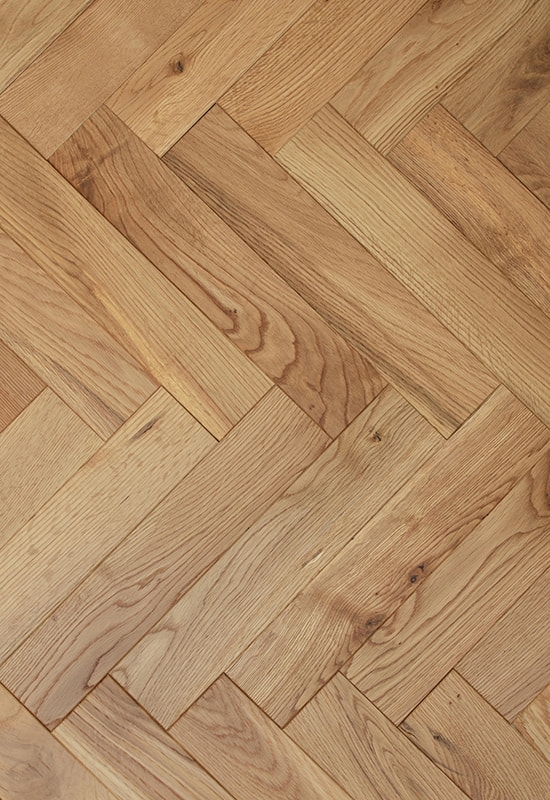
Design possibilities expand too. The engineered construction supports the wide planks, and intricate patterns like herringbone engineered wood flooring that would be too unstable in solid form at comparable dimensions.
How to Choose the Right Multi-Layer Floor
Four variables determine whether a multi-layer floor is right for a specific project. Get these right, and the floor will perform exactly as expected for decades.
Top layer (wear layer) thickness. This is the hardwood veneer you see and walk on. Common thicknesses are 1.2mm, 2mm, 3mm, 4mm, and 6mm. Thinner veneers (1.2–2mm) are cost-effective and suitable for light residential use where sanding is unlikely. Thicker veneers (3–6mm) are worth the premium in high-traffic areas or wherever the floor may need refinishing — each sand removes roughly 0.5mm, so a 4mm veneer gives you a meaningful buffer.
Core layer wood species. The quality of the plywood core matters as much as the surface. Birch and eucalyptus plywood are the benchmark: dense, uniform, and stable. Cores made from poplar or mixed softwoods reduce cost but also reduce stability and bonding strength. Ask suppliers specifically about core species — not all multi-layer products are equal beneath the surface. Our wide-plank engineered wood flooring range uses birch-core construction across the board.
Total board thickness. Multi-layer products typically range from 10mm to 20mm. Thicker boards (15–20mm) feel more substantial underfoot and offer better acoustic damping. For floating installations over existing floors, a 12mm or 14mm board often provides the best balance of comfort and practicality.
Formaldehyde emissions certification. The plywood core is bonded with adhesive, and adhesive quality directly affects indoor air quality. Look for products certified to CARB Phase 2 or EPA TSCA Title VI standards — the current national benchmark in the United States, which limits formaldehyde emissions from hardwood plywood to no more than 0.05 ppm. The EPA's official formaldehyde emission standards for composite wood products outline exactly what third-party certification is required and what labeling to look for when evaluating products.
Multi-Layer vs. 3-Layer: Which One Do You Actually Need?
Both are engineered wood floors. Both outperform solid hardwood in stability. But they're built differently, and each has a natural home.
| Feature | Multi-Layer (6–12 plies) | 3-Layer |
|---|---|---|
| Core construction | Cross-ply birch or eucalyptus plywood | Solid wood slats (pine, poplar) |
| Dimensional stability | Very high | High |
| Top layer thickness range | 1.2mm – 6mm | 3mm – 4mm (limited by core softness) |
| Total thickness range | 10mm – 20mm | 14mm – 15mm |
| Suitable for underfloor heating | Yes | Yes (with caution) |
| Floating installation | Excellent | Good |
| Best for | Commercial, large spans, humid environments, radiant heat | Residential, moderate climates, traditional installations |
The 3-layer format is a genuine hardwood floor through and through — all three layers are solid wood veneer. That gives it a particular feel and acoustic density that some buyers prefer. But because the core is softwood, it can only support a limited top-layer thickness. Multi-layer's plywood core is harder and more uniform, which means it can carry both very thin and very thick hardwood veneers — giving specifiers more flexibility on refinishing lifespan and surface texture.
For most commercial projects, large residential open plans, and any installation involving underfloor heating or ground-level moisture risk, multi-layer is the more resilient choice.
Why the Core Material Defines Quality
The wear layer gets all the attention — and rightly so, because it determines the look of the floor. But the core determines whether the floor is still performing in 20 years.
The most important distinction is between birch or eucalyptus plywood cores and budget alternatives built from poplar or mixed-species boards. Poplar is lighter and cheaper to source, but its lower density means weaker glue bonds between plies, higher susceptibility to delamination under humidity stress, and reduced structural rigidity under heavy loads.
Birch plywood, by contrast, has a Janka hardness of approximately 1,260 lbf — significantly denser than poplar. That density means each adhesive bond is stronger, each layer resists compression better, and the finished floor holds its shape across a wider range of environmental conditions.
The adhesive system matters equally. Low-quality urea-formaldehyde resins are cheap but off-gas over time and degrade in the presence of moisture. Quality manufacturers use moisture-resistant phenol-formaldehyde or melamine-formaldehyde adhesives certified to international standards — and they can prove it with third-party test reports, not just labels.
When evaluating a multi-layer product, ask two questions: what species is the core, and what is the adhesive certification? The answers tell you more about real quality than the surface finish ever will.

 +86-572-2118015
 No.598. Gaoxin Road, Huanzhu Industrial Zone, Huzhou City, Zhejiang Province, China, 313000