

 Eng
Eng  English
 中文简体
中文简体 Français
Content
Moisture content (MC) is the single most important variable that determines whether wood flooring will remain flat, tight, and trouble-free. In wood flooring, MC is expressed as a percentage of the wood's dry weight, and the acceptable range for interior installations is generally 6% to 9%. Pre-finished products typically arrive at 6% to 8%, while site-finished and acclimated solid boards can reach 9%. These figures correspond to a room environment of 30% to 50% relative humidity (RH) and 60°F to 80°F.
But "acceptable" is not a fixed number. The target depends on species, construction type, local climate, subfloor conditions, and installation method. A 7% MC in white oak may be normal, whereas the same reading in maple could be a warning. Understanding equilibrium moisture content (EMC) is essential for selecting, shipping, and installing floors that will perform for decades.
Why Moisture Content Matters
Wood is hygroscopic, which means it constantly exchanges moisture with the surrounding air. The moisture content at which it stabilizes is called equilibrium moisture content (EMC). When the EMC of the environment changes, the wood gains or loses moisture and changes dimension.
- When a floor gains moisture, the board faces expand. In solid wood, this leads to cupping, crowning, warping, and gaps.
- When a floor loses moisture, it contracts. In an installed floor, contraction causes gaps, squeaks, and in severe cases, cracks.
- Above 16% MC, mold can colonize the wood. Around 28%, decay fungi become a risk.
The goal is to install flooring at a moisture content close to the EMC of the room where it will be used. If a floor is installed at 11% MC in a room at 35% RH, it will dry out and shrink. If it is installed at 5% MC in a 60% RH room, it will absorb moisture and expand, possibly buckling. This is why understanding acceptable moisture levels is the first step in cupping prevention.
Acceptable Moisture Levels by Flooring Type
The table below summarizes typical ranges for different wood flooring systems. These are guidelines, not absolute warranties. Manufacturer specifications and local climate may require adjustments.
| Flooring Type | Acceptable MC% | Key Considerations |
|---|---|---|
| Solid wood (site-finished) | 6-9% | Species adjustment needed; acclimate 5-7 days |
| Engineered (plywood core) | 6-9% | Cross-ply structure resists movement |
| HDF engineered | 6-9% | Dense core minimizes expansion; suitable for underfloor heating |
| Pre-finished (all types) | 6-8% | Factory-controlled MC; check on delivery |
While solid wood is the strictest case, engineered flooring offers more tolerance. The cross-ply construction of an engineered plank reduces board movement, allowing a slightly wider installation window. Even so, the recommended MC remains in the 6% to 9% band, with the subfloor within 2% of the selected flooring.
For concrete subfloors, moisture testing is mandatory. A calcium chloride test (ASTM F1869) or an in-situ RH test (ASTM F2170) should show that the slab is dry enough before any wood floor is installed.
How to Measure Moisture in Wood Flooring
Accurate measurement protects both the installer and the product. Two meter types dominate:
- Pin-type meters use two small pins that pierce the board surface and measure electrical resistance. They give accurate readings but leave tiny holes. They work well for unfinished boards and test samples.
- Pinless meters use electromagnetic induction to measure MC without damaging the surface. They read through a finished plank and provide a deep scan of the material, making them ideal for pre-finished flooring.
Either way, species correction is essential. A meter calibrated for oak will report false values on hickory, acacia, or walnut. Most modern meters include built-in species tables. Take at least ten readings per 1,000 square feet, spread across the entire site, not just one corner. Also measure the subfloor: both wood subfloor MC and concrete slab moisture should be confirmed before installation.
Species, Construction, and Surface Treatment Factors
Solid wood flooring reacts to moisture based on species density and cell structure. Dense hardwoods like maple and hickory show greater dimensional change in response to humidity than white oak, which is naturally stable. This is one reason white oak remains a preferred species for engineered and solid floors in climates with significant seasonal humidity swings.
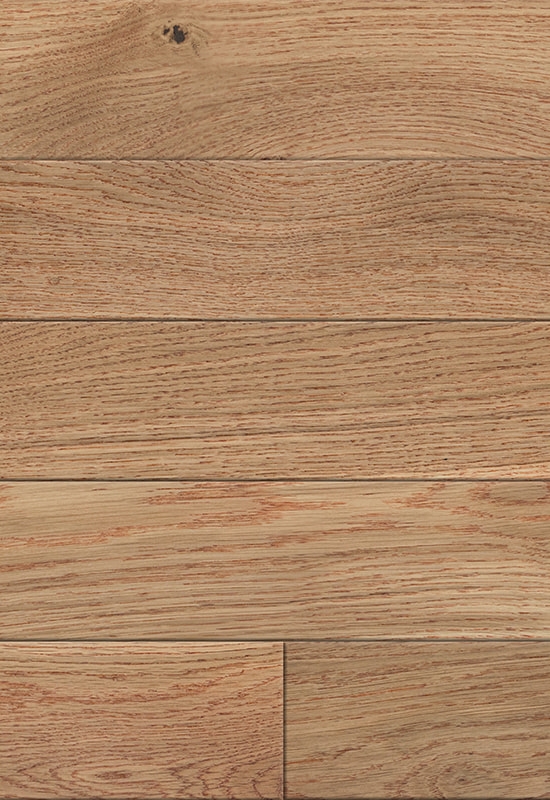
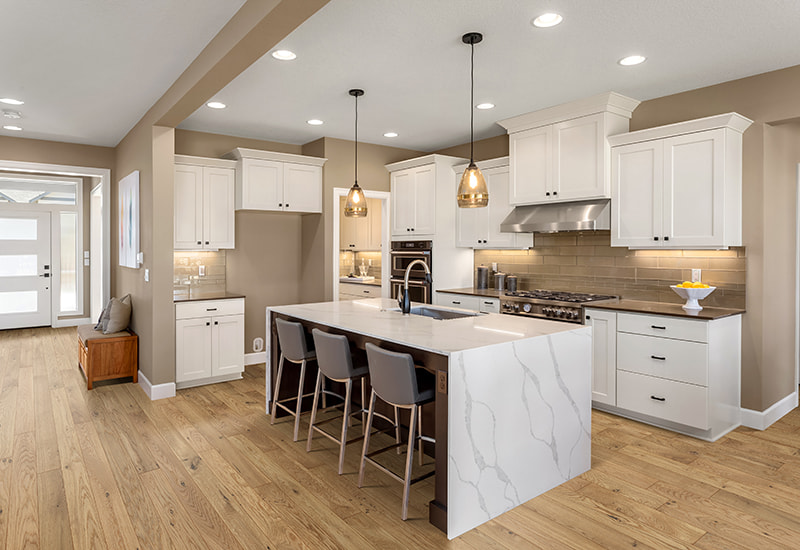 Brushed White Oak Solid Wood FlooringThis 18mm thick white oak solid flooring features a brushed surface and low 15-20° gloss, offering a subtle matte finish that highlights natural grain. Its 90mm width suits residential and commercial spaces, while the stable oak species helps manage humidity-driven movement.View Product →
Engineered wood flooring uses a cross-ply core. The face layer sits perpendicular to the core, which constrains expansion and contraction. This construction can reduce board movement by up to 70%, allowing engineered flooring to be glued down, floated, or nailed over various subfloors.
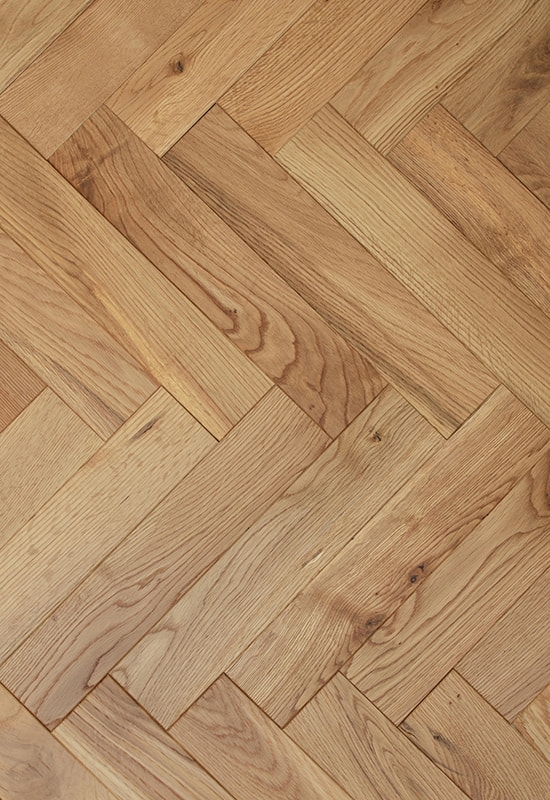
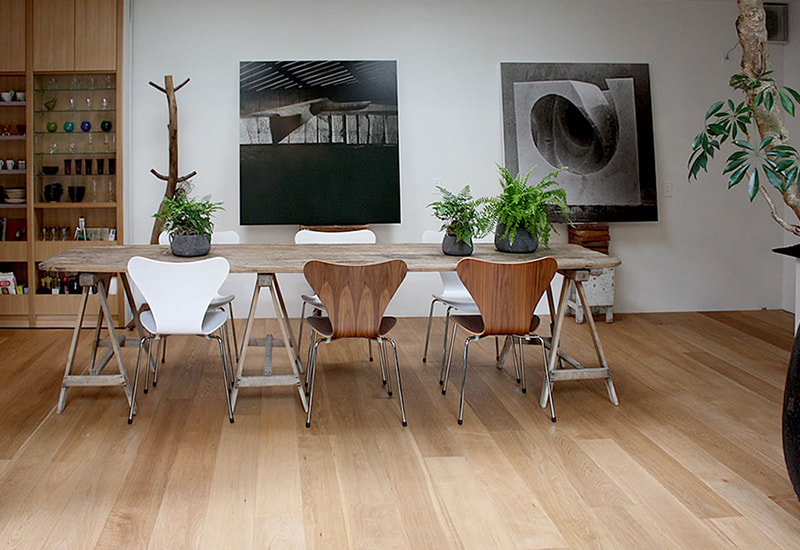 Light Brushed Engineered White Oak FlooringThis engineered white oak flooring with light brushing and standard bevels comes in varied thicknesses and widths. Its cross-ply core reduces movement, making it suitable for gluing, floating, or nailing over diverse subfloors, and the light brushed finish enhances natural texture.View Product →
HDF engineered flooring replaces the plywood core with a high-density fiberboard. HDF is dense and uniform, with lower swelling risk from incidental moisture. Combined with a protective finish and proper edge sealing, HDF engineered products are increasingly used in residential and commercial projects where humidity control is variable.
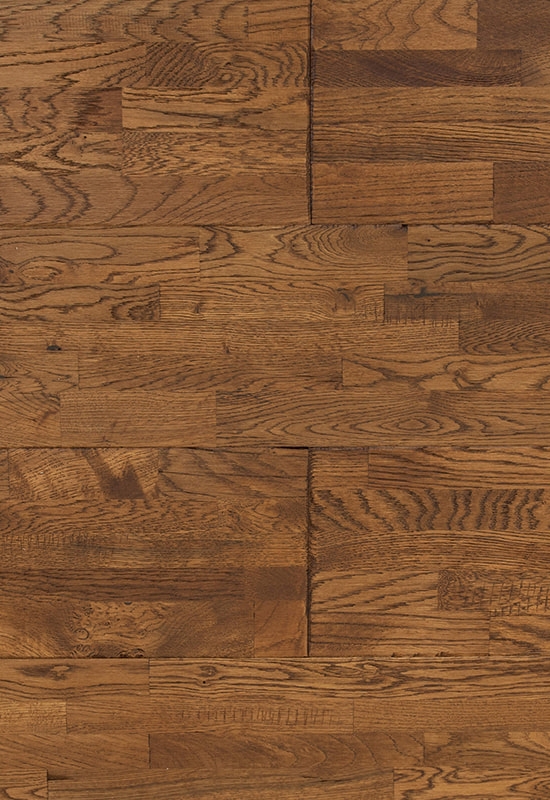
Surface treatment also affects moisture behavior. A sealed surface with UV lacquer or oil blocks rapid moisture ingress but does not eliminate it. Smoked and carbonized white oak, for example, undergoes a stabilization process that darkens the wood and reduces tannin pull, while deep-brushed and hand-scraped surfaces add texture that requires generous finish coverage to protect the fibers from taking on moisture.
Procurement and Installation Risks
Imported wood flooring carries unique moisture risks. During ocean freight, temperature and humidity swings inside a container can create condensation. Flooring that leaves the factory at 7% MC can arrive at 10% or higher if packaging or container conditions are compromised. Buyers should therefore request moisture content verification from the supplier and confirm that kiln drying and packaging meet export-grade standards.
Reputable manufacturers test MC at every production stage. In quality-control programs at Chinese factories such as JESONWOOD, pre-finished boards are conditioned to target MC, then packed with moisture barriers and desiccants in sealed containers. A supplier that cannot provide a moisture report or explain its QC process should be treated cautiously.
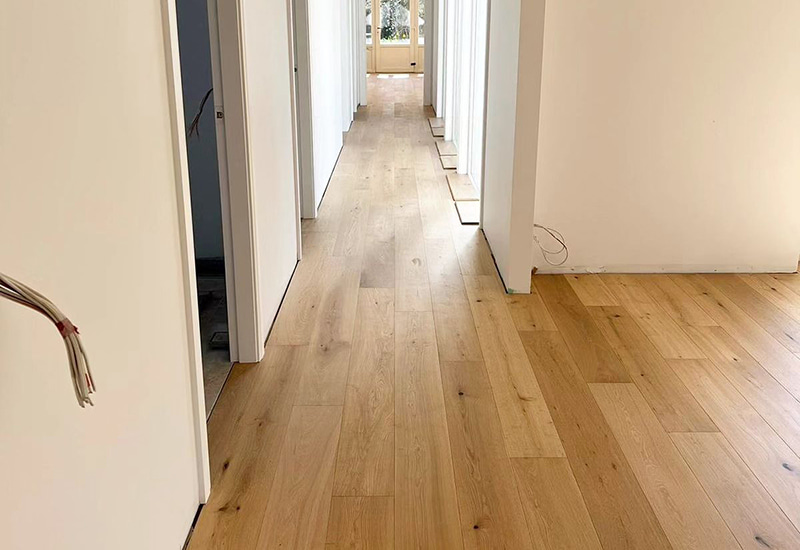 Open Pore UV Lacquered HDF White Oak FlooringThis HDF engineered white oak flooring uses an open pore finish and UV lacquer coating for scratch and stain resistance. Despite an HDF core, it maintains natural warmth, and its construction helps resist moisture-related issues, making it a durable choice for living areas.View Product →
On-site acclimation is non-negotiable. The flooring should be allowed to rest in the room for at least 72 hours — five to seven days is safer — while the room is controlled to 30% to 50% RH and 60°F to 80°F. For concrete slabs, verify that the subfloor MC is within 2% of the flooring MC before installation starts. Skipping this step is the most common cause of post-installation cupping and gaps.
Best Practices in Summary
A reliable moisture management plan follows five steps:
- Confirm the site EMC and target MC for the flooring.
- Use a calibrated meter with species correction.
- Acclimate the flooring in the installation room.
- Measure the subfloor and document results.
- Maintain 30% to 50% RH after installation.
For solid wood, keep the MC between 6% and 9%, with no more than a 2% differential from the subfloor. For engineered and HDF floors, the same range applies, but tolerance is more forgiving due to cross-ply or dense HDF construction. Always check the manufacturer's written specifications before proceeding.

 +86-572-2118015
 No.598. Gaoxin Road, Huanzhu Industrial Zone, Huzhou City, Zhejiang Province, China, 313000